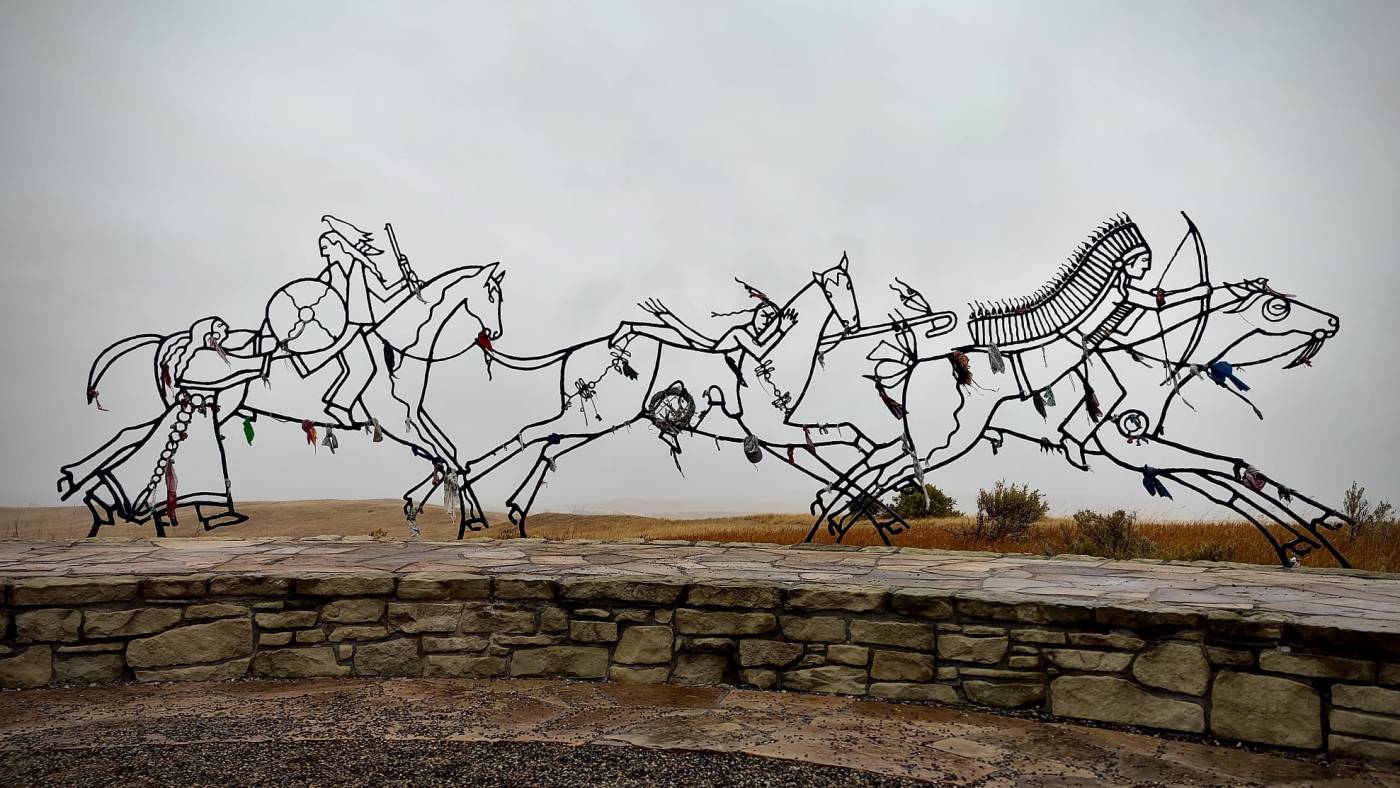
After the cattle drive in Wyoming, we set off on the second leg of this epic adventure. We rolled out of Wyoming and headed north into Montana. Prior to leaving this state, we moseyed down to the town of Buffalo which as a traditional old west town was a delight. It is in Johnson County in Wyoming with a population of around 4,415. It emerged during one of the wildest periods in American history and was known as Outlaw country. It was embroiled in the Johnson County Cattle Wars. Tensions arose between homesteaders and cattle kings in the 1880’s leading to conflict which shaped the West.
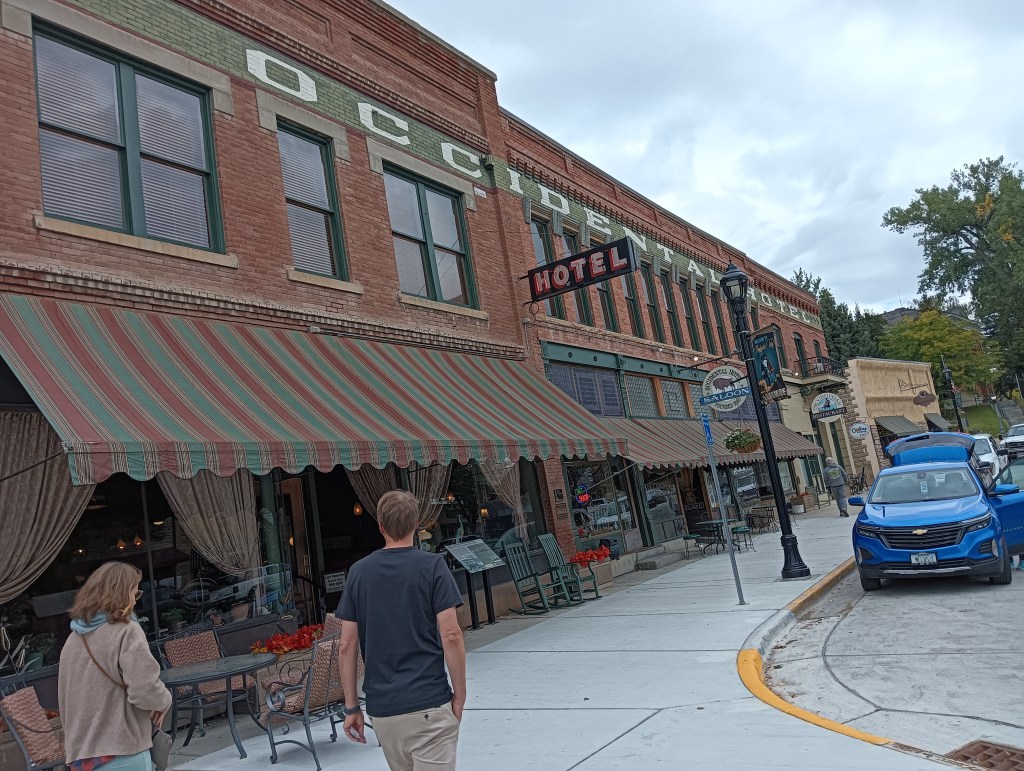
The town was very traditional and harked back to the days of the Old/Wild West and was charming. We once again shopped for souvenirs and purchased clothing, whilst taking in the sights of this town, made famous years ago by the likes of Buffalo Bill, and Calamity Jane both of whom had visited a hotel called The Occidental. ‘The Ox’ was founded in 1880 and is today, an award winning restoration of this famous western hotel, a historic saloon where you can step back in time when you enter. Travelers through Buffalo could enjoy the hospitality and it was visited by the likes of Buffalo Bill, Calamity Jane, Teddy Roosevelt, and its where Butch Cassidy and the Sundance Kid rode to after hiding out in the nearby town of Hole-in-the-Wall. It is an authentic and genuine hotel and still bears the bullet holes in the saloon from those days gone by.
We had been informed that the Amish supermarket made the best doughnuts so from Buffalo, we sourced this magical place and called at a traditional Amish shop where we found homemade crafted items being sold alongside the best doughnuts known to man! They were huge and inexpensive, and made for the best in car snacks, to provide us with sustenance for our onwards journey. We had picked up various snacks for the road trip, products that were non-existent in the UK such as Slim Jims, cinnamon liquorice, strawberry laces, various flavours of crisps and numerous other unhealthy sugar loaded goodies but nothing hit the spot like those doughnuts.
It had been a long held dream of mine to visit the battle site of Little Big Horn, to visit the ill fated Last Stand of Lt Col George Armstrong Custer which was the very reason for our interlope into Montana. I had studied American history during my studies at school and I have a strange fascination with the tales of the Old West. After travelling for around 122 miles and a couple of hours across the desolate plains, the weather had taken a turn for the worse and the sky was grey, and rain and fog drizzled in. There was no blueness visible at all, and the conditions were decidedly grim, which felt rather fitting for the sombre battle site.
The battle of the Little Big Horn took place over two days, starting on 25th June 1886. It took place on sacred grounds, belonging to the native American tribes who had wandered the Black Hills and surrounding areas for centuries. The National Park Service now manage the site to protect its cultural and historic resources. Tensions had been rising between the Untied States and the Lakota Indians for years prior to this battle and in around 1874, Lt Col Custer was ordered to explore the Black Hills inside the boundary of the Great Sioux Reservation. The Lakota hunting grounds were invaded by powerful Army expeditionary forces who were determined to conquer the Northern Plains Indians and after Lt Col Custer announced the presence of gold, this precipitated the great Gold Rush, bringing with it conflict between Americans and Native Americans.
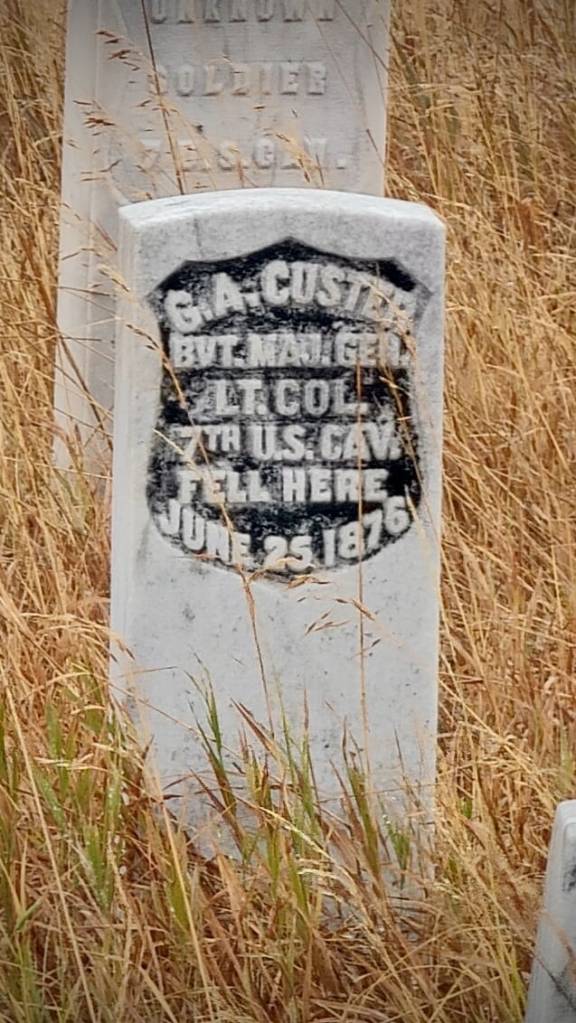
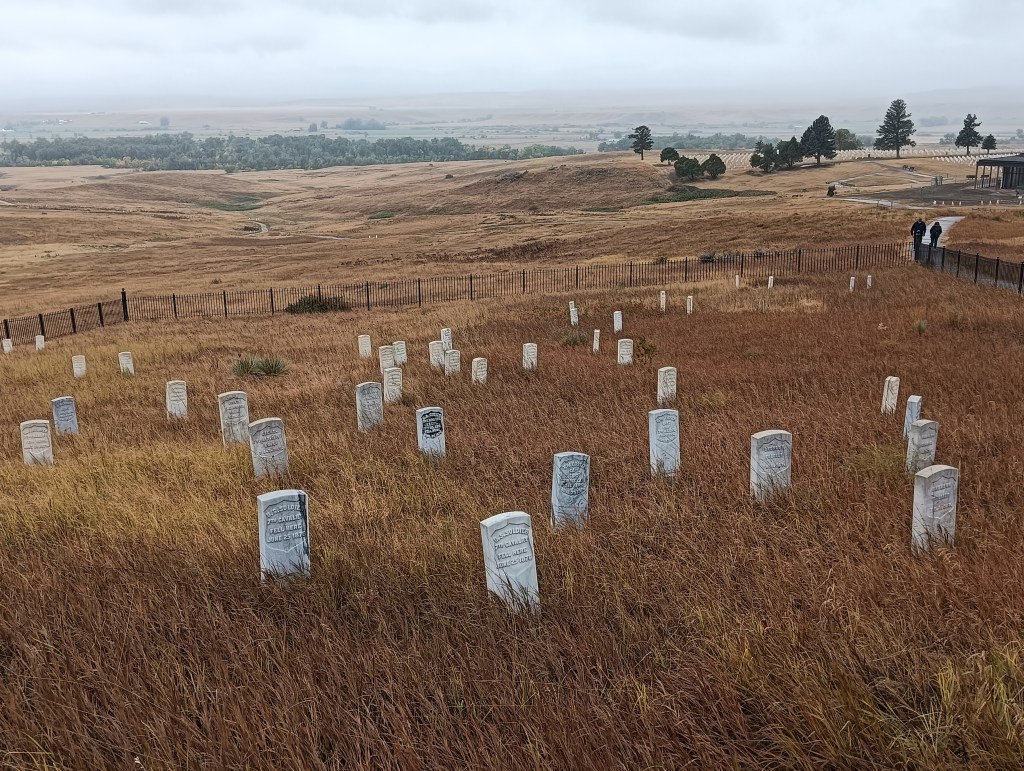
The landscape was typical of the states that we had passed through – endless plains and prairies rolling on as far as the eye could see with very little sign of human presence. We pulled up in the car park and despite the weather, we jumped out of the car in time to listen to a park ranger regaling the story of The Last Stand. He was a wonderful story teller, explaining dramatically how the failed campaign unfolded, how the American soldiers of the 7th Cavalry fell, how they killed their horses to try to take cover behind their bulbous corpses, how the Native Americans (Indians) took the victory. There were white headstones marking the spot where each soldier fell, although there was a white headstone with a black inset which marked the very spot where Custer himself fell to the earth, slaughtered and defeated.
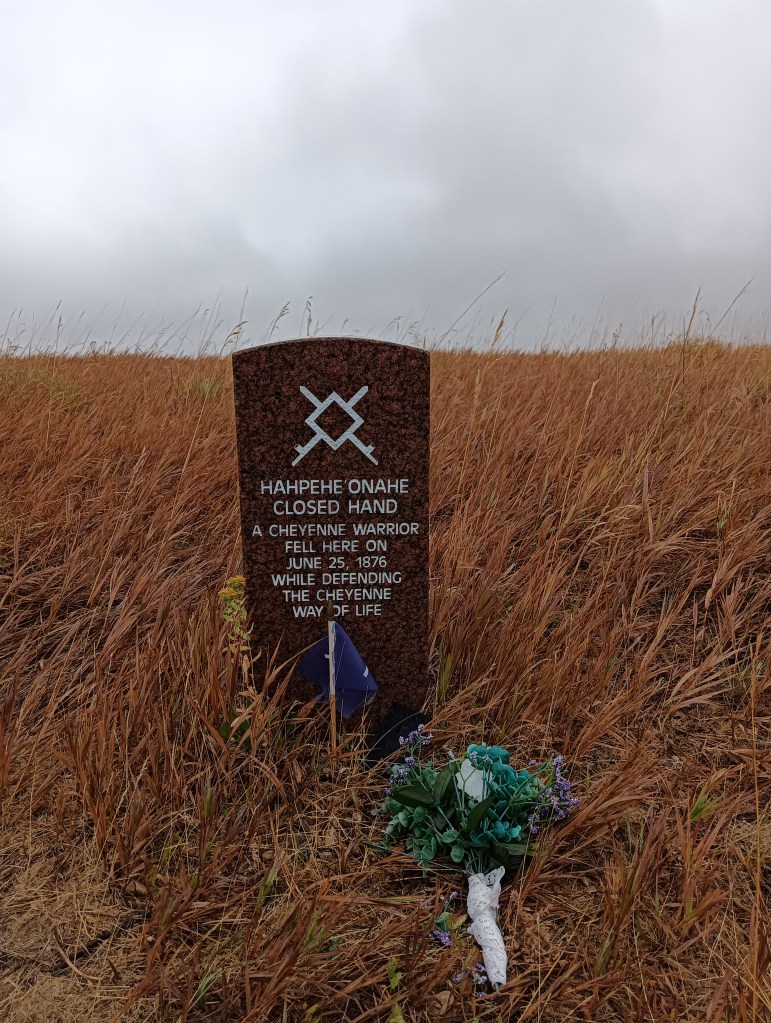
There had been the largest encampment of Indian tribes at the Little Big Horn River, and it is estimated that there were some 7000 Indians, around 1500-2000 of them were Lakota, Cheyenne and Arapaho warriors or ‘braves.’ In contrast, there were only around 600 American soldiers, civilians and Indian scouts under the command of Lt Col Custer. There are differing interpretations of exactly what happened but the version from the Indians is widely accepted as being more accurate. Lt Col Custer was known for being gallant and flamboyant but by the second day, the soldiers had been wiped out. 263 soldiers were killed, along with 80 Indians. Native American legendary figures such as Crazy Horse and Sitting Bull, and Lame White Man along with others had been involved even if not directly, but negotiations had failed, and the US Army were surrounded, hugely outnumbered, under resourced and duly dispatched.
There were red headstones marking where the Indians fell, although these were few and far between. The headstones were not where the actual bodies were left, as they had been removed and placed with dignity and respect into a military cemetery. There was also a memorial to the horses that were killed, as well as the Native Americans that had been slayed. It was haunting and a poignant reminder to all of a failed campaign. Although the Indians won this battle, they did not win the war and ultimately, their downfall became inevitable. Within 5 years of the battle of the Little Big Horn, all Native American survivors were forced into reservations, never to roam the plains again, nor experience the encampments that had been present at this time.
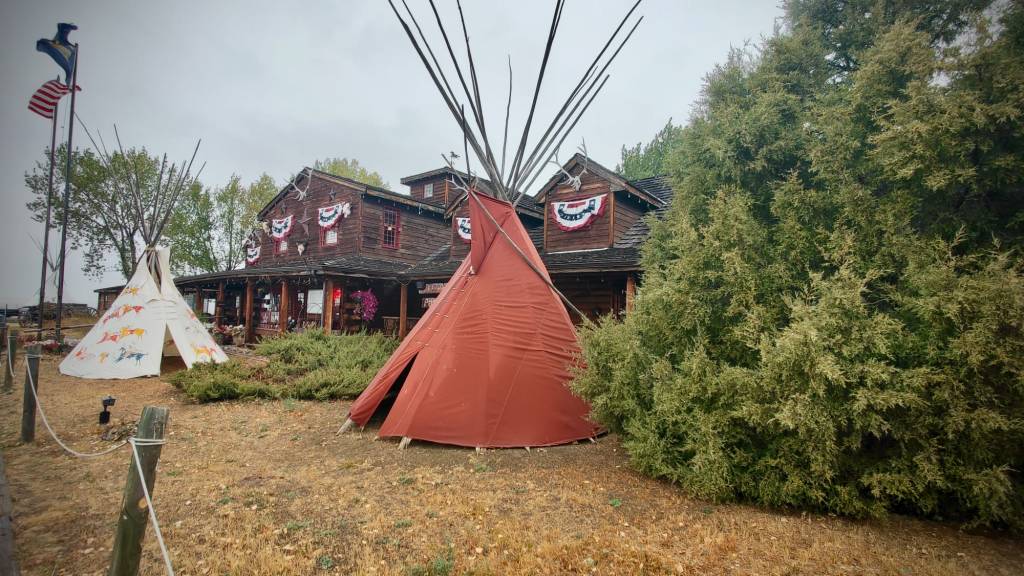
We visited the nearby Trading Post surrounded by wigwams, which was wonderful souvenir shop, managed by members of the Crow tribe. There was genuine and authentic memorabilia in this magical shop including guns and weapons found at the battle site, and relics of the days of the wild west. The land that we visited was part of the Crow reservation and after leaving Little Big Horn, our road trip took us through both the Crow Reservation, and the Northern Cheyenne Reservation.
After the sojourn into Montana, we circled back to Wyoming because the next destination was somewhere that Mr Nomad was anxious to see. He wanted to see the epic Devils Tower, a natural monument made famous by the 1977 film Close Encounters of a Third Kind. The weather had really taken a turn for the worse and as we crossed the vast plains, we witnessed many thunderstorms, and got caught in battering rain, before arriving in the small back water town of Hulett some 196 miles later.
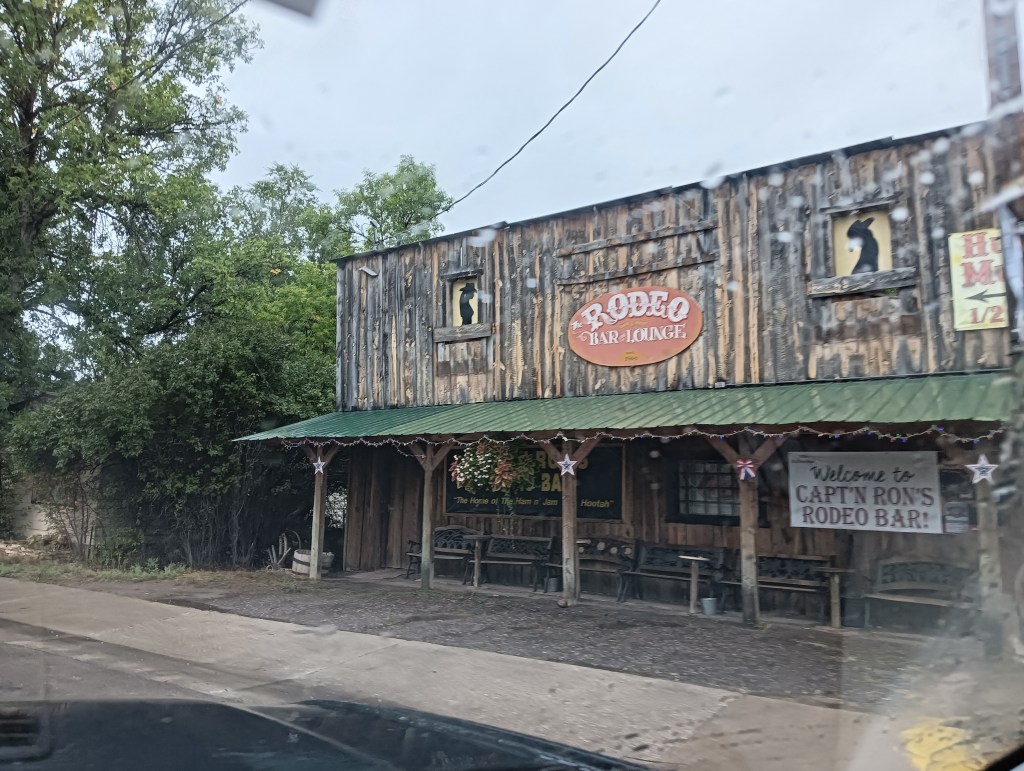
I say a town, but the population of Hulett is around 383, and it is a typical old west cowboy type place in Crook County with wooden buildings, and not much activity at all. We ventured out to Ponderosa’s Cafe for dinner, as it was the only place open and ate a delightful burger and following this, we decided we wanted to visit an old fashioned saloon bar. There was one in Hulett called Captain Ron’s Rodeo bar and it was described by the locals as a dive bar, and once we ventured inside, we couldn’t have agreed more that this bar was a dive! We stayed for only one beer, fearing that as strangers to the area, we might not be as welcome as we had hoped so given the terrible weather, we had an early night to prepare for day nine of this trip.
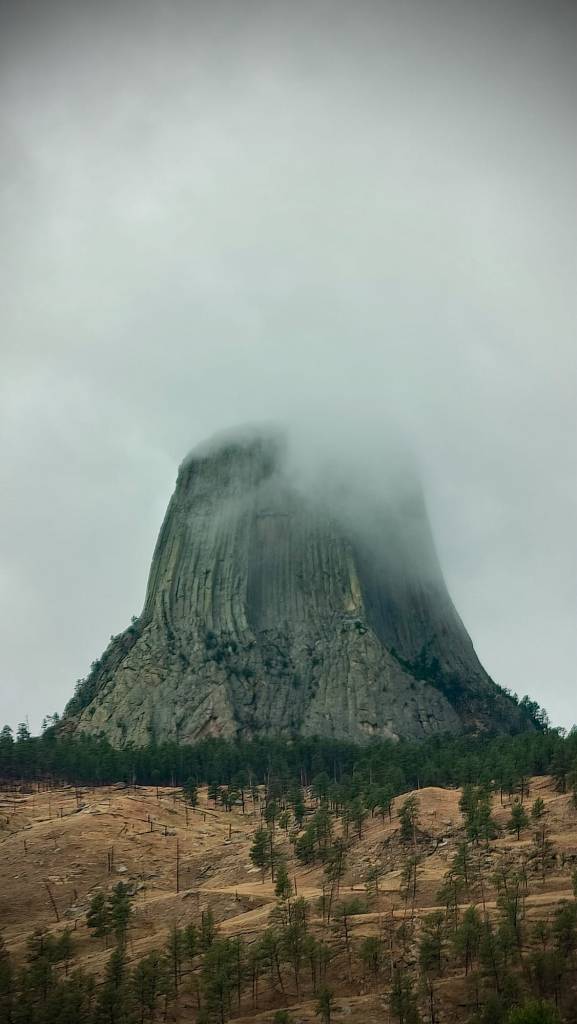
The following day we rose early to drive to Devils Tower. It was still a little miserable and overcast but this did not cloud the day. Devils Tower rises 867 feet into the sky and despite being shrouded with fog and mist, it was truly an awesome sight to behold. It is a striking igneous rock butte in north east Wyoming and holds profound spiritual significance for native American tribes. It is on sacred ground in the Bear Lodge Ranger District of the Black Hills, above the Belle Fouche River and known as Mato Tipila or Bear Lodge and it was easy to see why such an awesome monument was revered.
We drove on for around 94 miles, our destination that day being Rapid City. We had not scheduled much time at this city, but it was more to break up the next leg of the drive across one of the biggest states on this journey. After edging out of Wyoming, we were driving across South Dakota next but on the way, we came across the town of Deadwood.
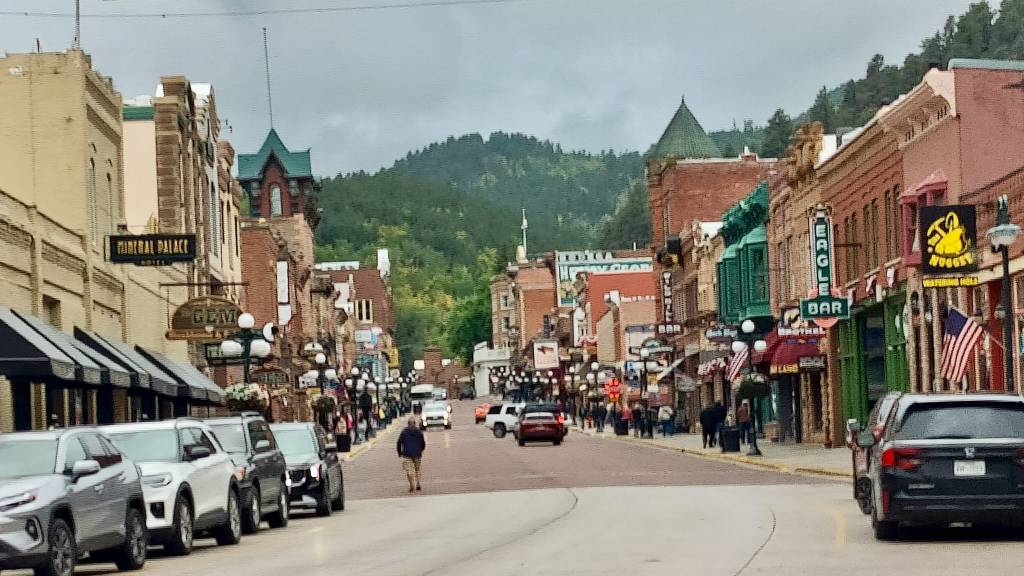
This town is in in Lawrence County in South Dakota and had its hey day from 1876-1879 after gold deposits were discovered leading to the Black Hills gold rush. Much to our joy and fascination, this town was like something straight out of the movies – it was very much an old wild west town, and was a typical western high street. At its height, it had a population of around 25,000 and attracted legendary figures such as Wyatt Earp, Calamity Jane, Seth Bullock and Wild Bill Hickock. Its population these days is around 1343. The entire town has been designated as a National Historic Landmark District and it was not difficult to be intrigued by it. The town had began illegally in the 1870’s on land which had been granted to the Lakota tribe in 1868 with the Treaty of Fort Laramie. It had guaranteed ownership of the Black Hills to the Lakota people who consider this area to be sacred. After the gold rush following Lt Col Custer’s announcements of the presence of gold, the new and lawless town of Deadwood sprang up.
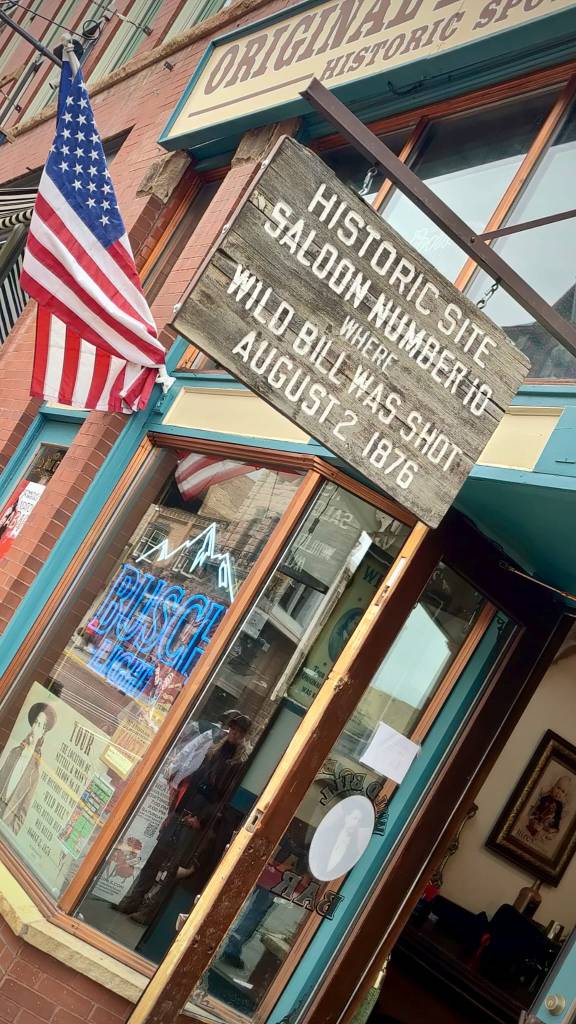
Most famously, it was where Wild Bill Hickock had met his demise. Mr Nomad and I just had to visit the actual bar where this legendary cowboy was gunned down and it did not disappoint.
As with many other cowboy places, No.10 Saloon was adorned with wild west memorabilia including guns, stuffed animals, clothing typical to the people of that time, a roulette wheel amongst many other items. It was fascinating and appeared to be straight out of a movie set. Wild Bill Hickock had been murdered in 1876, and although the bar itself had burned down in a fire which destroyed most of the town, so hence had been re-built, it was still authentic and many original features still remained.
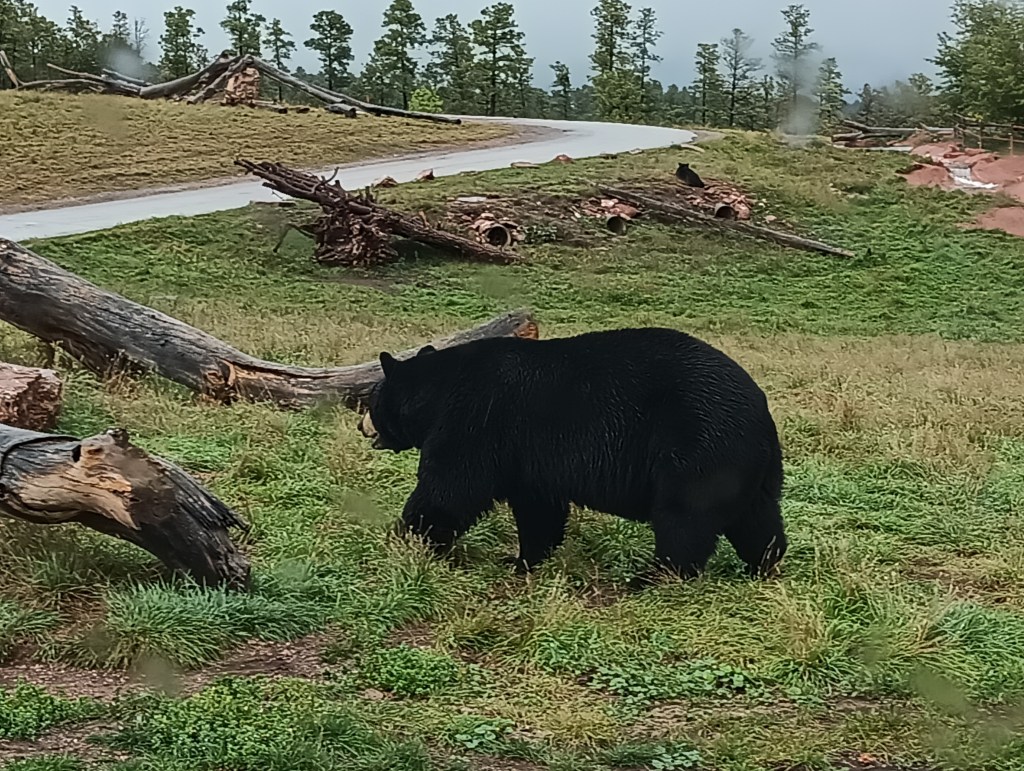
We drove on and along the way, called into Bear Country. This was a wildlife park offering a leisurely drive through the scenic Black Hills where we were at last, able to see wild life native to the area, creatures that we had not been lucky enough to see in the wild. Numerous species wandered freely in their natural habitats. It was kind of a sanctuary for animals that had been saved, but we were able to see bison, deer, elk, reindeer, coyotes, otters, cougars, lynx, wolves and finally, bears.
We saw black bears and brown bears and we were overjoyed to see them albeit in captivity. There were also some smaller furry creatures to see such as gophers, and groundhog.
As we approached Rapid City, it was in stark contrast to the states we had passed through as it was a huge city. It is in Pennington County, in South Dakota. It was most definitely urban, and the traffic was immense. The population is estimated to be around 80,589 which makes it the second most populous city, after Sioux Falls, another city that we were heading towards. We spent very little time here and it was more a gateway to allow us to cross South Dakota, to our next destination that being Sioux City. It is located on the eastern slope of the Black Hills in western South Dakota, and named after Rapid Creek. I have refered to it being the gateway to other places and it is actually known as the ‘Gateway to the Black Hills’ and the ‘City of the Presidents’ because of life size statues of bronze president statues down town.
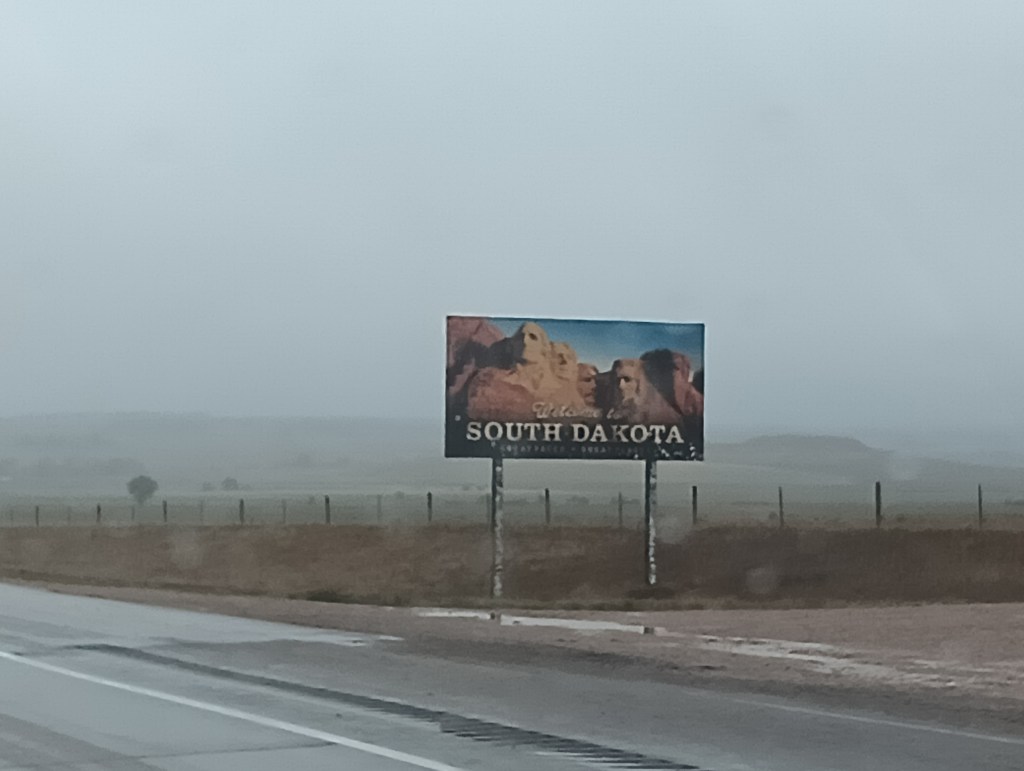
Day Ten was the epic drive across the entire state of South Dakota. 429 miles of driving! Our end destination was actually in Iowa, another state so we were keen to crack on. Leaving Rapid City led to opening up yet again the vast and expansive landscapes, the grasslands, the prairies and dry scrubland interspersed with the occasional burst of green with the odd line of trees. We left the Black Hills behind us and kept seeing signs and bill boards advertising Wall Drug.
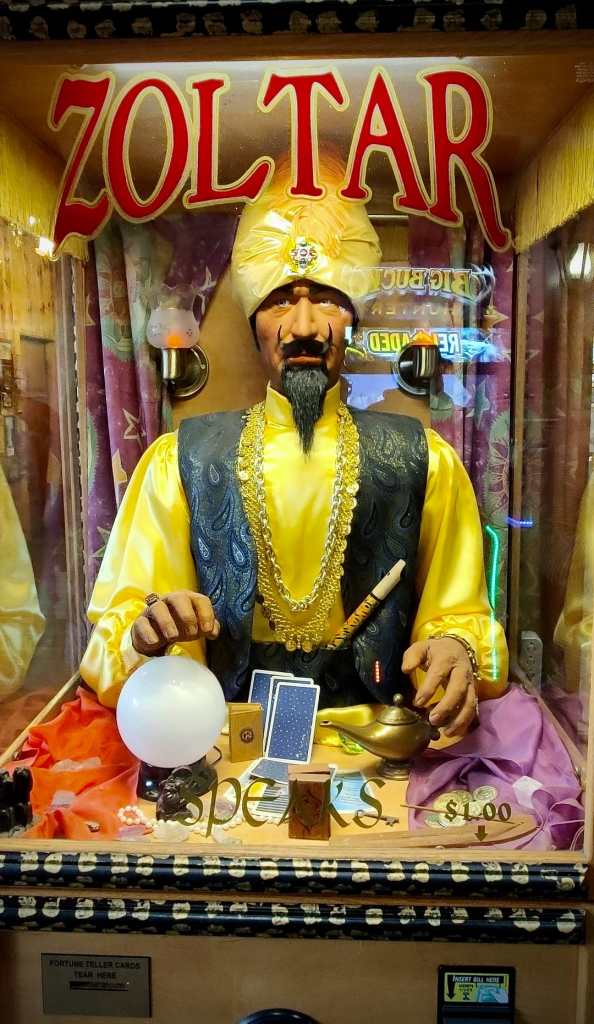
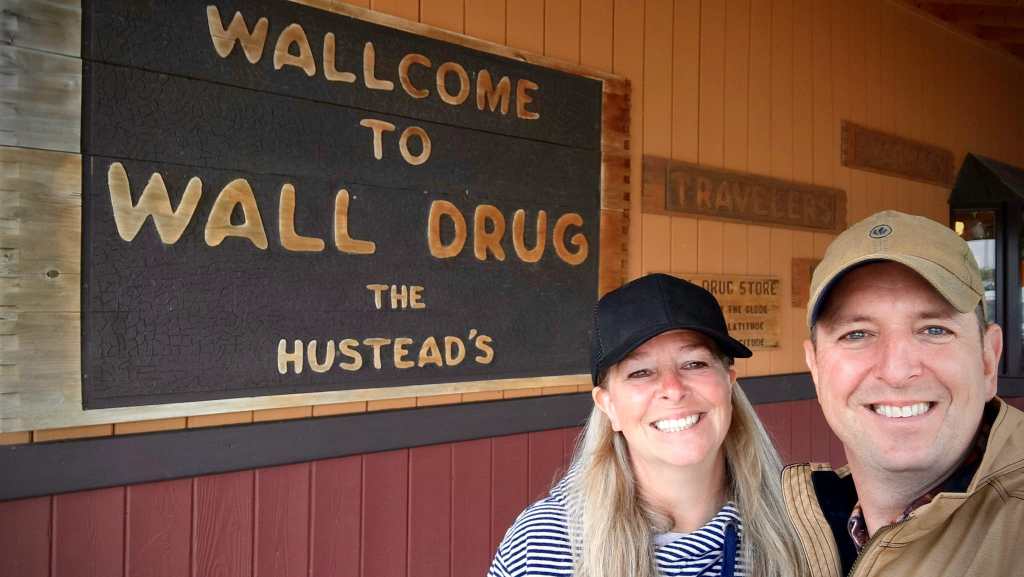
We figured out that the town of Wall offered a drug store which was so big that it had evolved into a tourist shop, as well as a lorry park and resting area for larger vehicles travelling across the states. Wall Drug was once again, wild west themed and adorned with stuffed animals and wooden statues of famous cowboys and outlaws, with a vast array of Indian paraphernalia such as a giant totem pole but it was fascinating all the same. It had opened in the 1930’s where truckers could get a free glass of iced water and a ‘nickel’ coffee and now it is a huge souvenir shop and cafe. For those of us that remember a film called Big featuring Tom Hanks, Mr Nomad had his fortune told by Zoltan – if you know, you know.
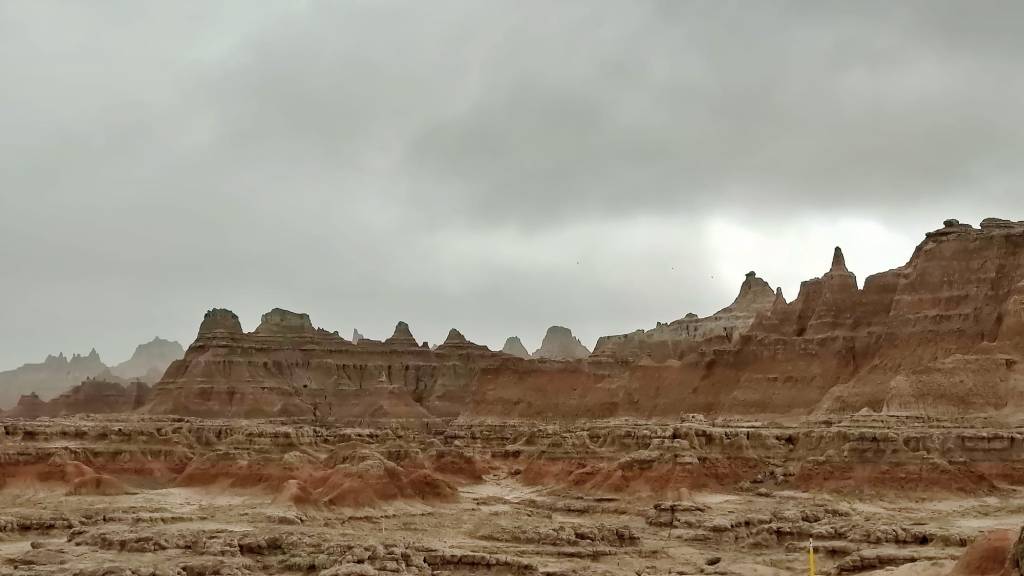
We stopped there only for a quick comfort break but went on our way, and encountered the Badlands. This was awesome! After driving over endless flat plains, we came across epic rock formations which had been in existence for millions of years within what is now known as Badlands National Park. Its approximately 244,0000 acres in size. Its located in the south western area of South Dakota and was established as a national monument in 1939 and was designated a national park in 1978. We stopped to take in the epic scenery which was a very welcome break on our travels. The rocks were towering, with striking geological deposits containing one of the world’s richest fossil beds, and multi coloured with layers of rocks plainly visible. It was fascinating and rather surreal, with the look of a different planet. The south half of the park is located in the Pine Ridge Indian Reservation and is co-managed with the Ogala Sioux Tribe.
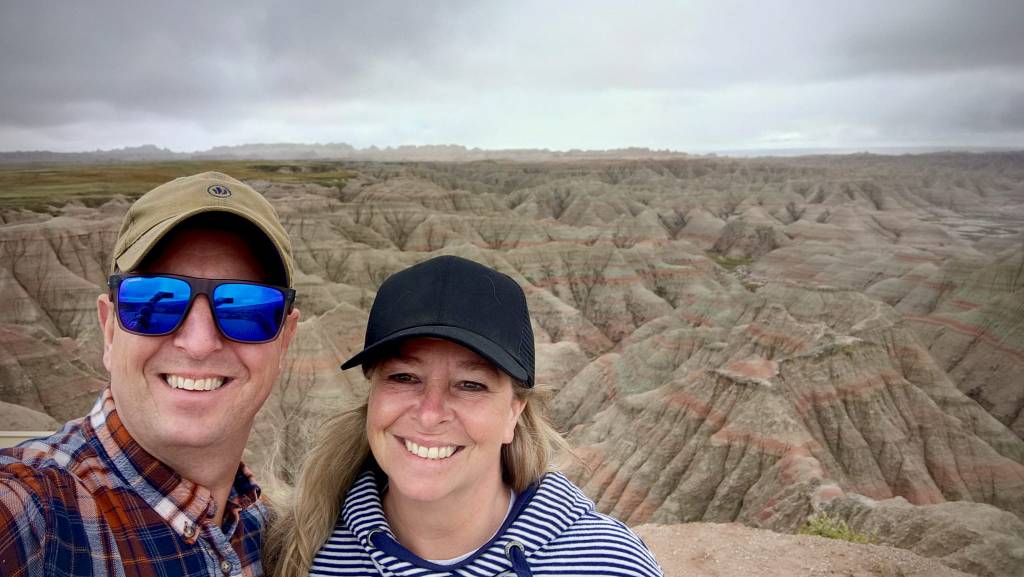
There are numerous hiking trails in the area but we were just passing through, and the weather was not conducive to walking out in the open. It was still very grey and miserable, with drizzle drenching us subversively. There were once more signs warning of the presence of rattle snakes, although we did not see any of these critters. I am not a fan of snakes but to see one in the wild would have been wonderful but it was not to be. It was rather cool, and miserable so we figured the snakes had taken cover under the rocks.
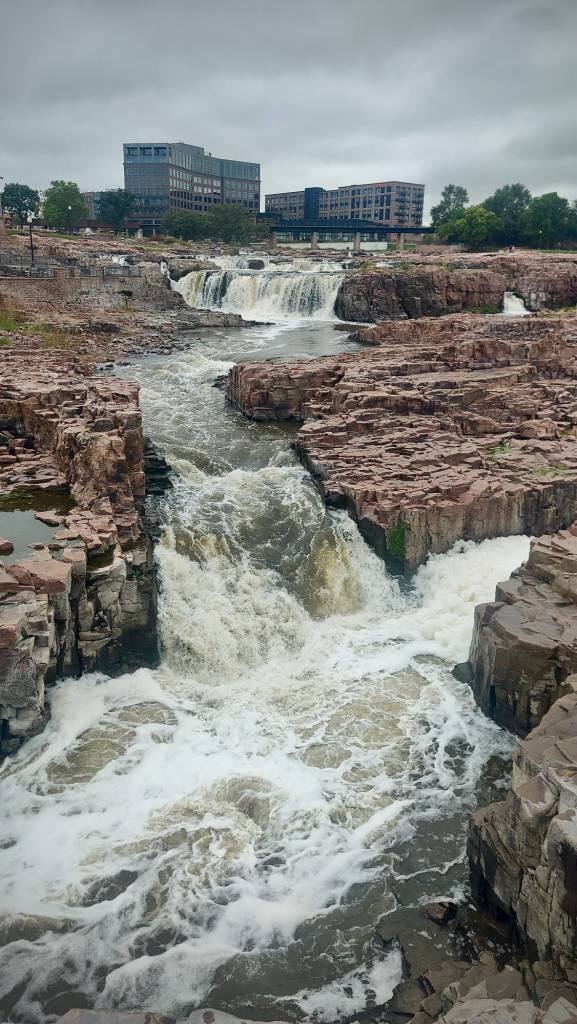
We drove on towards Sioux City and on the way, called in at Sioux Falls. We also passed through a time zone so we lost an hour. Sioux falls is the most populous city in South Dakota, and found in the county seat of Minnehaha county, also extending into Lincoln county. It is a magnificent cascade in the Sioux River. It was created around 14,000 years ago in the last ice age and it was still rather chilly when we were there. We had once more left the expansive country side and ventured into the towns so the landscape had shifted once more.
After spending 10 minutes or so sucking up the views offered at the waterfalls, we ended up in Sioux City crossing the state line into Iowa where we stayed at the Hard Rock Hotel and Casino. Mr Nomad and I have a habit of visiting Hard Rock Cafe’s wherever we travel across the world and collect T-Shirts on the way, so a stay in the Hard Rock Hotel was a must. The hotel itself was fantastic! It lived up to its rock ‘n’ roll reputation and was very bright and colourful, with a real buzz like a casino to be found in Las Vegas.
We had made our way out of the sleepy backwater states and were very much travelling through more urban states, with seriously populated areas, diversity and a vibrancy that comes with the hustle and bustle of cities and life. Gone was a laid back lifestyle and in came the excitement of surburbia.
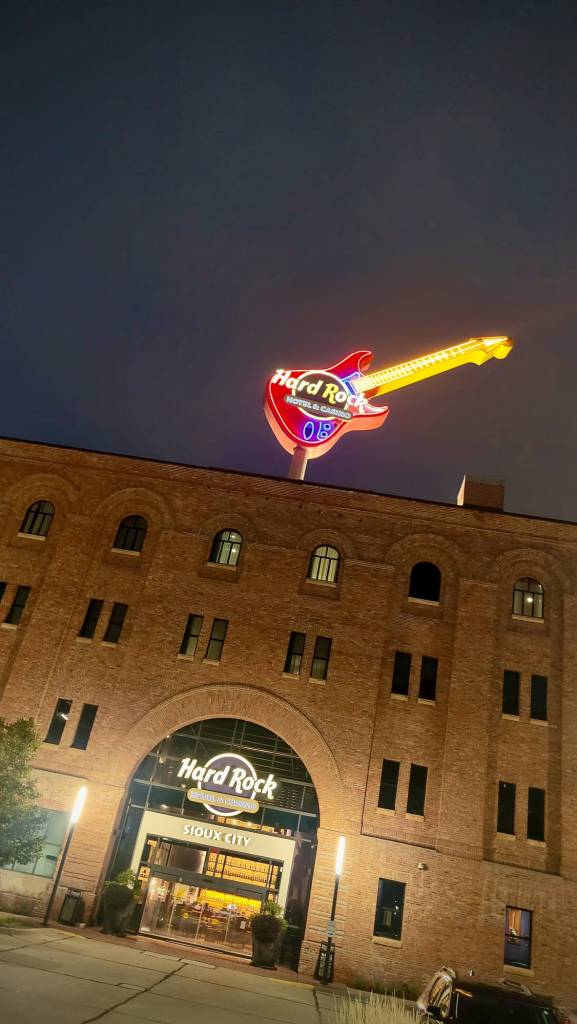
The Hard Rock Hotel and Casino was full of memento’s from musicians and artists such as a basque worn by Dolly Parton, the guitar of Roy Orbison, the boiler suit belonging to Elton John, a smashed up guitar of Kurt Cobain following Nirvana’s last ever performance in 1994, a smashed up guitar belonging to Chris Cornell, numerous items from the Rolling stones and the Beatles amongst many other worthy paraphernalia. Our room was large and opulent and very rock ‘n’ roll and we loved it.
We visited the casino on the evening and determined that we are both pretty poor at gambling, losing $50 in a couple of seconds whilst trying to play Black Jack. Mr Nomad was fascinated by the fruit machines but they held no interest for me so although the hotel itself was exciting, and a marvel with the bright lights and constant noises from the machines, designed to entice in unsuspecting customers, the casino did not float my boat. We purchased out T-shirts in the morning as we left, and were amazed to see people still in the casino from the night previous. On our travels, we had both been amazed at the sheer number of casino’s along the way. They were rife and appeared to be a favourite pastime of Americans, and in particular, were prevalent across the native American reservations.
Another thing that haunted us on our travels was a song entitled “Choosin’ Texas” by Ella Langley. This tune was constantly played on the radio, and it seemed to be the constant from state to state. She is a singer-songwriter from Alabama and this song has become the longest running number one song in the US Billboard Hot 100 history, overtaking Mariah Carey. Ella Langley is the first female artist to simultaneously top the US Hot 100, Hot Country Songs and Country Airplay Charts and we could understand why. It was incredibly catchy and was played constantly on every radio station. It felt like everywhere we went, Ella was right there with us singing in her southern drawl about unrequited love.
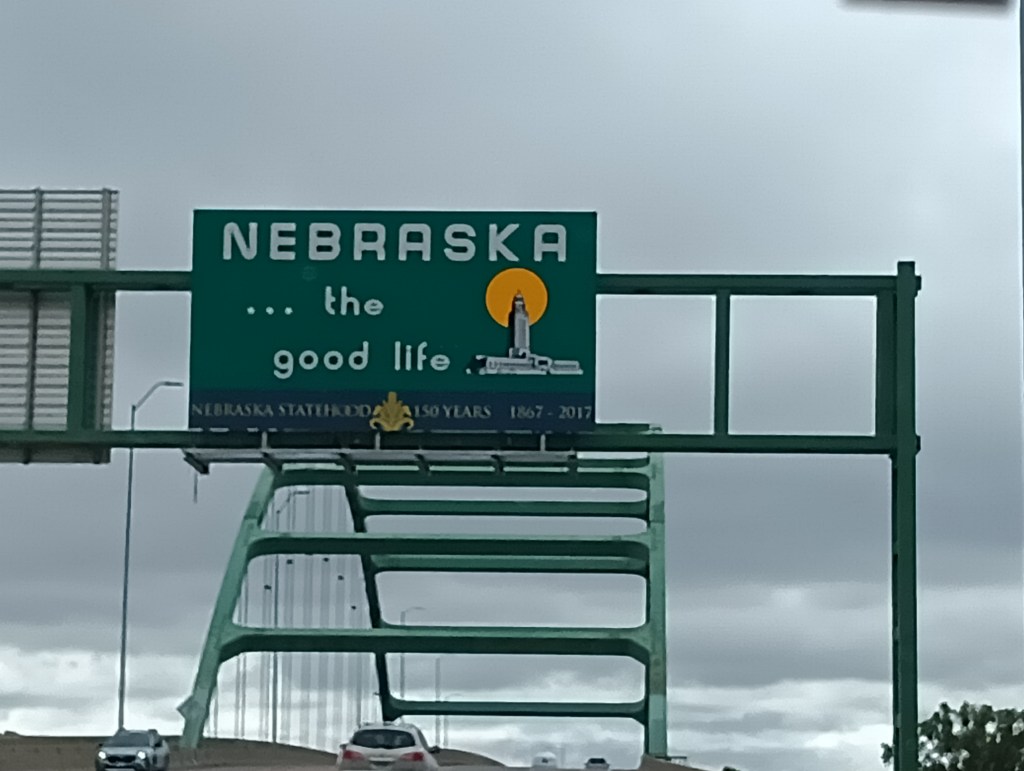
Day Eleven of this road trip saw us travelling to Kansas City. This was a drive of around 278 miles. Mr Nomad was desperate to eat breakfast in a traditional American diner so in our hunt for this very establishment, we actually crossed over into yet another state – this time the state of Nebraska. Sioux City is in Iowa, so we entered Nebraska for breakfast, then travelled to Kansas which is in a Bi-State that being Kansas and Missouri.
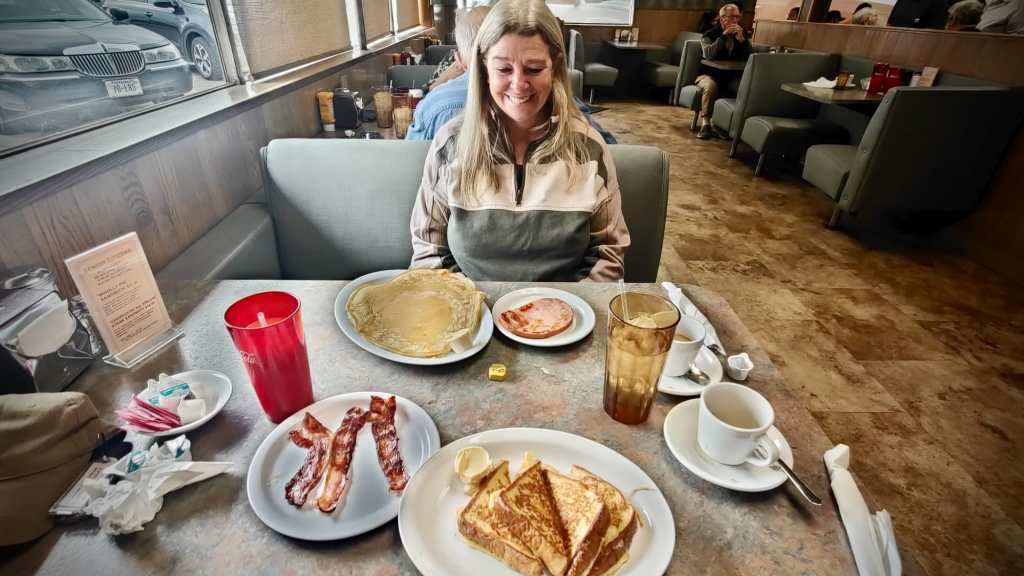
The breakfast has to be mentioned because not only did it add to our tally of states, we were served the biggest pancake we had ever seen for breakfast, accompanied by a slab of bacon, and French Toast dripping in syrup. We also enjoyed endless coffee. To our amusement, we had taken but a sip from the cup when the waitress was right back at the table topping up the coffee. We both felt that this was truly an all American experience!
Onwards to Kansas city where the landscape changed yet again. Although we left behind the city and the towns, and we returned to more rural country side, it was much greener than the brown and sun scorched plains of Wyoming, or South Dakota. The vast open spaces were filled with fields laden with crops such as maize/corn and sunflowers. It was brighter, and the rain cleared with the sun making an appearance so it was much more temperate, and reminded me of home. It started to feel more civilised than the wild west and we weaved our way across Missouri/Kansas for an overnight stay in the city centre. The city itself was huge and much more populated. It was in direct contrast to the more rural states that we had passed through, and it seemed very cosmopolitan and diverse. It is described as a city that blends mid-western warmth with a rich cultural identity shaped by a jazz heritage. It is nicknamed the City of Fountains with over 200 working fountains, and located on the Missouri river. It is the largest city in the state of Missouri with an estimated population of around 508,090 and straddling the Missouri and Kansas state lines.
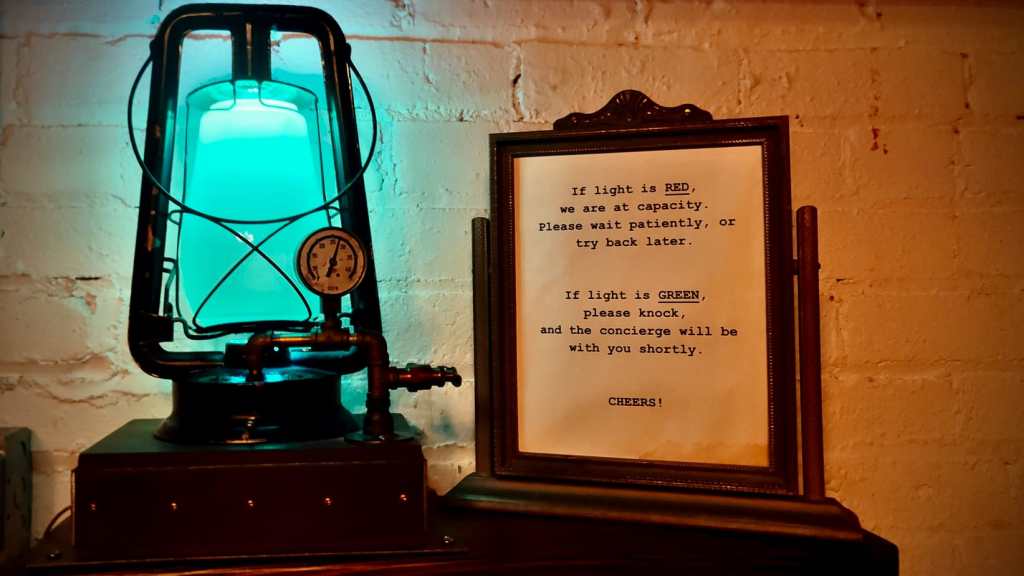
This was another destination where not much time was spent. However, we went out for dinner at the Rockhill Grill which was very posh and upmarket, and ate the most divine meal which Mr Nomad announced was a birthday meal. Following this, we decided to try to find a bar and Mr Nomad discovered an underground cocktail bar known as Swordfish Tom‘s. In the heart of the Crossroad Arts District, this was a ‘speak easy, ‘ a throw back to the days of prohibition and was very much underground, literally. It was spooky as we approached a heavy door and we had to wait for a light to show green, to see if we were allowed to enter.
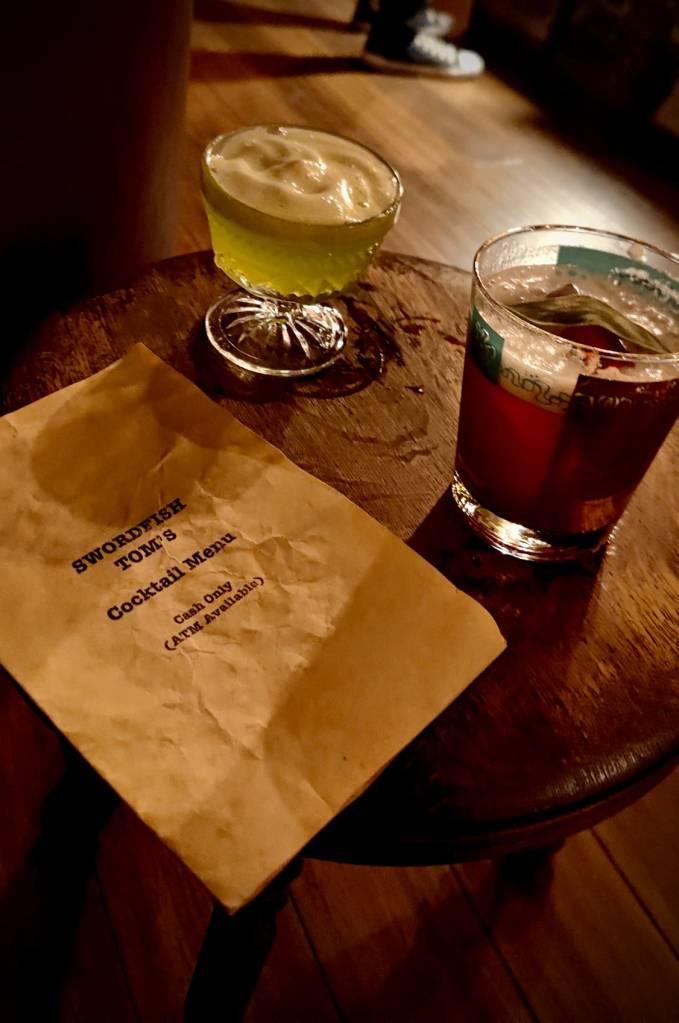
It was an old boiler room and the boiler known as Moody Maude was still apparent and it was dimly lit but incredibly atmospheric. The menu that we were presented with offered unusual creations and we sampled quite a few. I had a cocktail named the Last Cigarette and being an ex-smoker, it tasted exactly like that last cigarette. I also had a Yoshima which was bright green topped with melon foam, and Mr Nomad had a Cherry Bomb, Pink Robot and another interesting concoction which I forget the name of but contained blackberry syrup and was topped with sage foam. I also had a Blowing Smoke but this was not my favourite. The host had noticed my face pulling and immediately made up an alternative which went down very well. Whilst at this bar, we were informed that if we wished to write a post card to ourselves, it would be mailed to us.
Having consumed a few very strong cocktails, we were dubious but nevertheless, wrote a postcard to ourselves. This added to the charm of this underground tavern. This was enjoyed as a very private and intimate nightspot and turned out to be a favourite of ours on this journey.
The following day saw us depart Kansas City and we headed to another city – St Louis in Missouri. This was a journey of around 248 miles. We had very much left behind the rural landscapes and we were very much in the cities, with the increasing volume of traffic and the general business and chaos associated with thousands of people. We were feeling incredibly lethargic at this point and the drive seemed longer than usual, and the only explanation would have to lie with the copious amount of cocktails of the previous night. The country side was very much like Kansas, with the greenery of the crop fields, and very much like home.
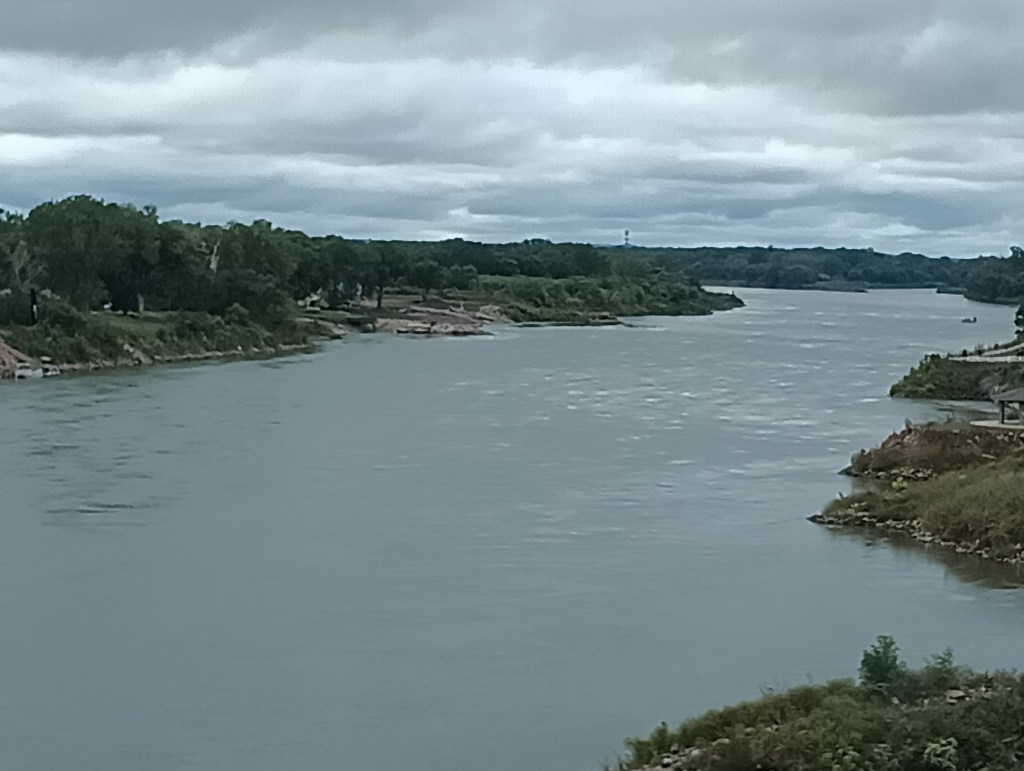
St Louis is an independent city in Missouri lying at the confluence of the mighty Mississippi and Missouri rivers. With an estimated population of around 301,578, its metropolitan area extends into Illinois. The land that became St Louis had, similar to much of the land across the Untied States, been occupied by Native Americans for thousands of years before Europeans migrated and became settled. It was founded on 14 February 1764 by French fur traders who named it after King Louis IX of France. Immigrants from Ireland and Germany arrived in significant numbers in the 1840’s and the population boomed from less than 20,000 to around 77,680 in 1850, to over 160,000 by 1860. Settled by Southerners in a slave state, the city was split in political sympathies which became polarised in the American Civil War.
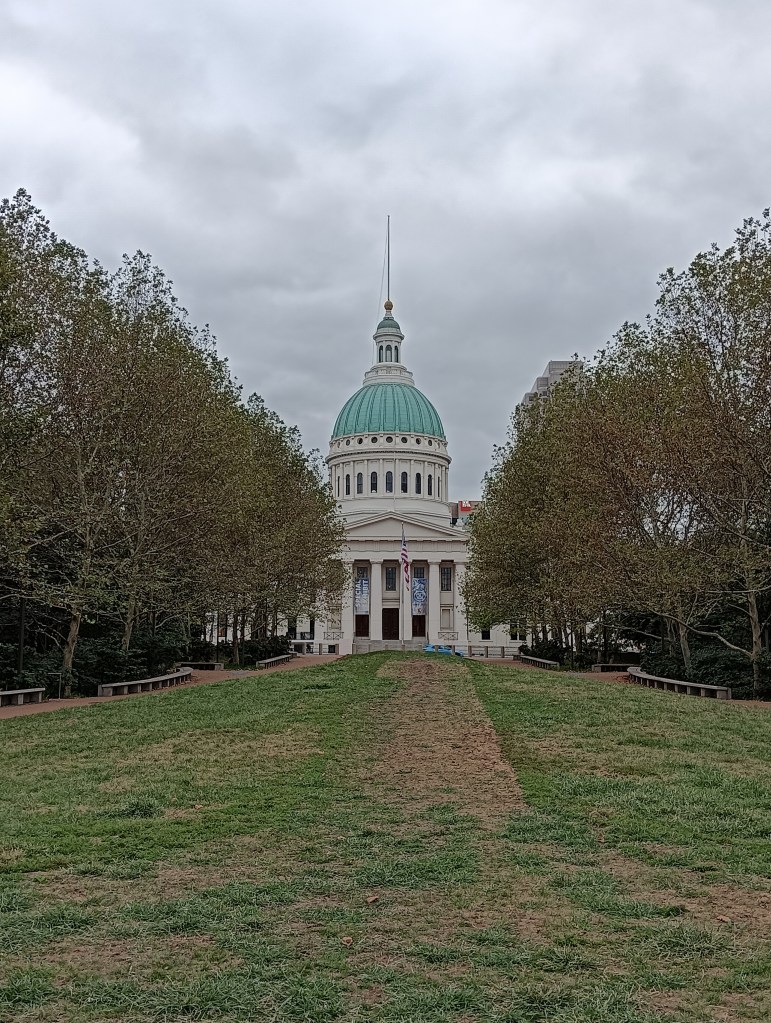
As a slave state, segregation was apparent and continued until the 1970’s. This made for some uncomfortable questions, particularly when viewing a statue of freed slaves outside the old Court House, but despite a murky past, it was a salient reminder that such history creates and contributes to the rich diversity found today.
On the subject of home, in St Louis, we stayed in a hotel called The Cheshire which was UK themed and is adorned with the Union Jack flags. When we checked in, the hotel was like an old style hunting lodge, with once again, stuffed animals on display but there was a red telephone box, and a statue of a soldier in a red tunic wearing a bearskin, akin to the soldiers seen on parade in London. On the walls, there were numerous pictures of old Kings and Queens, and noblemen and women, and each room was named after famous Brits including poets, authors, military leaders, the lates and greats from years gone by. Our room was named Yeats. We also saw themed rooms named after Lewis Carroll, J R R Tolkien, J M Barrie, Anna Sewell and Robert Burns amongst many others.
There was a bar, The Fox and Hounds Tavern, which was dark and dingy, but was decorated with ‘olde worlde’ oak panelled walls, and chesterfield couches to sit on. It reminded me of an old fashioned smoking bar, where gentleman of the day would smoke cigars, and read the news paper with a whisky. It was quant and charming, although we did have a rather ‘resident evil’ moment when the fire alarms went off, and although the noisy alarm soon shut down, the lights still flashed and the building itself became eerily quiet. It was quite spooky but only added to the strange eccentric feel of the place.
We ventured into the heart of St Louis itself which sits on the banks of the mighty Mississippi river. The area was the home of Mark Twain, where he infamously created Huckleberry Finn, and Tom Sawyer amongst other legendary fables. I have child hood memories of his books so there was a certain sentimental feeling but the river although huge, was very much like the Thames in London in that it is dirty looking, and there was plenty of river traffic, but not quite the old fashioned steamer boats that I had whimsically imagined.
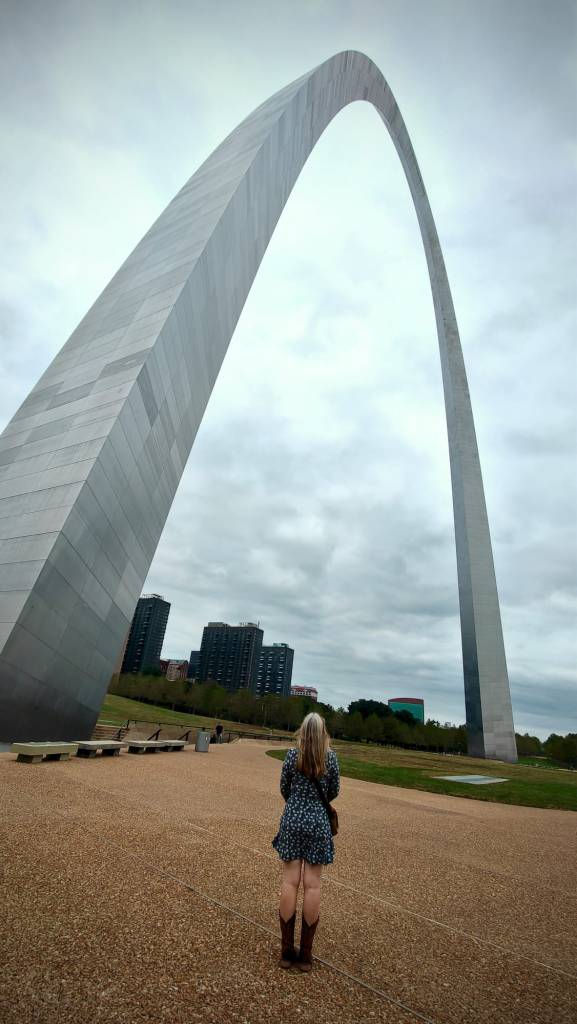
St Louis is also home to the Gateway Arch. This structure was impressive, standing at 192 metres (630 feet) tall. It is the world’s tallest arch. You can actually travel up inside the structure in a tram but we did not have time to dilly dally so gave this a miss but the Arch itself is a masterpiece and was well worth a visit. It was built to celebrate the westward expansion of the United States and is officially dedicated to the American people. The Arch is referred to as the Gateway to the West and building it commenced in 1963, with the incredible creation being finished in 1965. It was an epic sight, one which Mr Nomad and I were in awe of.
Mr Nomad had desires to witness a tornado and he was excited to learn that St Louis lies within the hotbed of Tornado Alley, one of the most frequently tornado stuck metropolitan areas in the United States. One of the most recent and most destructive tornados occurred on 16 May 2025 when a massive EF3, up to 1.8 miles wide struck. It left severe destruction in its wake with the death of 5 people before moving across the Mississippi river and dissipating past Illinois. We were in the right location but not at the right time of year so we did not get to witness such a force of nature, much to Mr Nomad’s disappointment but much to my relief.
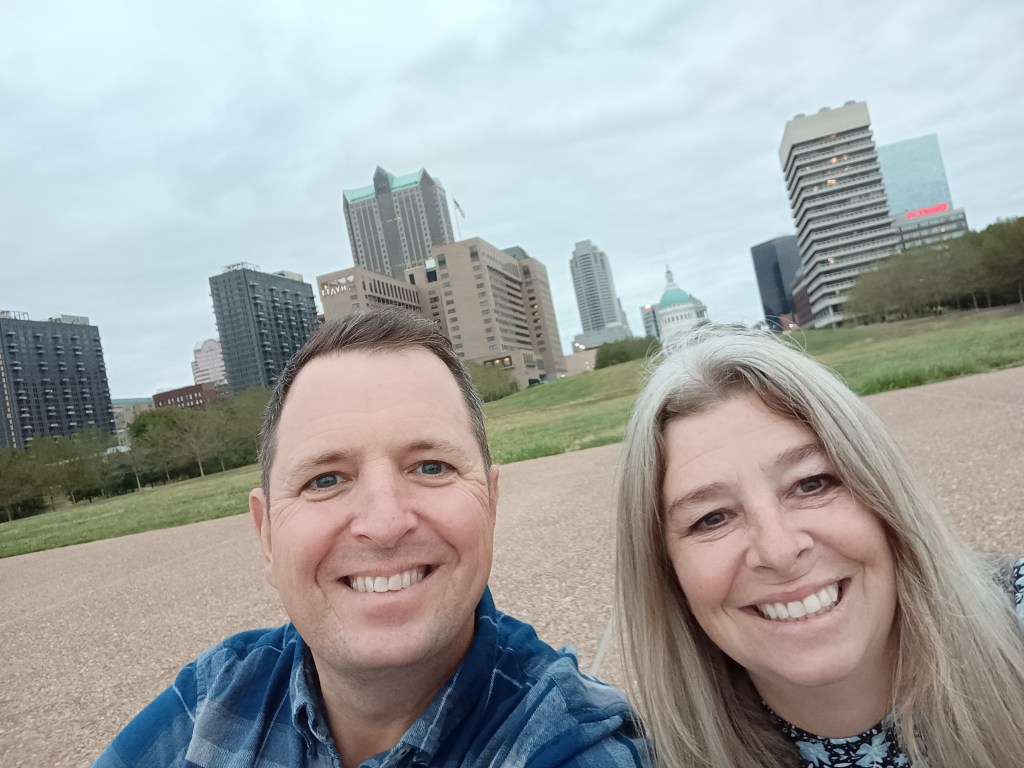
The evening in St Louis was spent at Cardinal Place next door to the Bosch Stadium, the home of St Louis’ major league baseball team – the St Louis Cardinals. We were quite exhausted at this point and had clearly overdone it the night before so we had an early night to prepare for the following day. We were to travel onto Indiana. This was the last day of the road trip because we were heading to meet our friends, Fred and Missy that we had met some years ago in the Maasai Mara. They had invited us to stay with them for a couple of days and we felt so incredibly lucky to be able to experience another state, and another corner of America.
This road trip had taken us through incredibly diverse and different pockets of the States and we had been intrigued and excited every step of the way. We had covered over 1610 miles and that is as the crow flies, and didn’t include our excursions to places of interest along the way, we had passed through seven states, and into our eighth state in five days and we had enjoyed every second.
Some of the destinations were unusual, but we had satisfied our curiosities’ to see different states and different locations which may not ordinarily attract tourists. We had been keen to see the real America, to avoid the well beaten track and although we had not loitered in many of the places on our way to Indiana, we had had a snapshot and a flavour of many different locations.
The country side had been ever changing as we journeyed from the Old West, also known as the Wild West through the Mid West, the weather had kept us on our toes and we relished the chance to catch up with friends… so on we went, our hearts already bursting with the intrigue of the adventures that were never ending, and bringing something new every step of the way, and being accompanied all the while by the ever popular melodies of Ella Langley.
#onwards
#ontheroadagain
#whistlestoptoursareus
#thepostcardarrivedathomeintheUK!


Leave a Reply