
The island of Malta was so close to its neighbour, Gozo, that it would have been rude not to visit, even though our time was limited because we had attempted to exhaust the adventures on Gozo.
Malta is an island country in Southern Europe in the Mediterranean Sea, nestled between Sicily and North Africa. Its an archipelago some 80 kilometres south of Italy, 284 kilometres east of Tunisia and 333 kilometres north of Libya. It is on the African tectonic plate and there are only 3 islands inhabited on the archipelago those being Malta, Gozo and Comino. With a population of around 542,000, and an area of around 316 square kilometres, the capital city of Valletta is one of the smallest in the European Union but one of the most densely populated. Like Gozo, it is rich in history and has been inhabited since around 6,500BC.
Malta was distinctly different to Gozo and although still rural and traditional with surface level similarities, it is extremely modern and developed with a thriving tourist industry. Mr Nomad and I were taken aback at how busy Malta was when compared to Gozo, and how it was seemingly so much more popular than the quiet back water of the neighboring island only a mere 20 minutes away on the local ferry. It was like stepping back into civilisation, notwithstanding its archaic roots.

There are three rather splendid natural harbours on Malta. The Grand harbour is found on the eastern side of Valletta and dates back to the Roman times and accommodates the most immense cruise liners on their travels. The huge Siege Bell lives on the walls of the Grand Harbour which is rung at noon every day. Marsamxett harbour is on the western side and famed for its yacht marina’s and Marsaxlokk harbour also known as Malta Freeport on the southern side of the island is the main cargo terminal. There are also two manmade harbours. Cirkewwa Harbour connects to Mgarr harbour on Gozo and it was here where we hopped on the ferry. We could not believe the convenience of what was simply like a giant floating taxi. With very regular crossings between Malta and Gozo, the roll on roll off ferry was perfect for our quick day trip to see what we could see. It was super efficient and departed around every 20 minutes and went back and forth between islands all day and into the night, allowing easy passage for the locals and tourists alike. Mr Nomad and I drove the little hire car on and we barely had time to drink the iced coffee bought on board before we were disembarking. There were also links to other islands such as Sicily and although we would have loved to go further afield, those trips will have to undertaken at a time to come in the future.

We made our way to the capital of Valletta and after figuring out where to park in the increasingly busy surroundings, we strolled through the streets admiring the Baroque style architecture and basking in the watery mist of an amazing fountain. We parked close to Tritons Fountain, a magnificent Modernist structure of three Tritons holding up a large basin, with the city gates in sight. It was incredibly hot so we took every opportunity to cool ourselves. Shade was non-existent, the streets were jam packed with visitors, it was almost frantic in its atmosphere so in stark contrast to the sleepiness of Gozo, and we strolled up Strait Street (Strada Stretta in Maltese) which was renowned for its vibrancy and in the 19th and 20th century was extremely popular with the locals, British and American military men and rife with bars, bordello’s and entertainment establishments.
We walked on until we came upon St John’s Co-Cathedral in the city centre. Such is the popularity of this religious building, we had to queue for some time before being allowed to enter but the waiting was more than worthwhile.
The exterior of this cathedral is rather austere and reminiscent of a fortress and belies its opulent interior. It was built by the Order of St John and completed in 1577, soon after the Great Siege. From the outside, it did not strike me as particularly special (Oh how wrong I was!) and it is said that it was purposefully built this way to reflect the sombre mood of the Order after the Great Siege. It was intended to be a landmark that could be seen from almost anywhere on the island and the Order of St John dedicated the church to St John the Baptist.
The Great Siege occurred in 1565, just shortly prior to the building of this magnificent cathedral and it was when the Ottoman Armada attacked Malta. The war lasted a mere three months and under the leadership of Grand Master Jean Parisot de Valette, victory was secured.
The Hospitaller Order of St John of Jerusalem, of Rhodes, of Malta is a Roman Catholic religious Order. They are the world’s oldest surviving Order known for its military and chivalrous character. Members of the Order were known as Knights and they were bound by three monastic vows of poverty, chastity and obedience. During crusades, they were obliged to protect pilgrims but ultimately, they were responsible for protecting the Christian world. The Knights were usually noblemen from important families across Europe and their mission was to protect and preserve the Catholic faith.

After around 200 years following the victory at the Great Siege, the Order surrendered the Maltese islands in 1798 to the French troops under Napoleon and subsequently the Knights were expelled from the island. The Order then settled in Rome and still exists to this day and is known as the Sovereign Military Order of Malta.
Upon entering this building, the interior was simply breath taking. It is considered to be one of the finest examples of high Baroque architecture in Europe and it was easy to see why it is one of the most popular tourist destinations on the island. It was incredible, and Mr Nomad and I were speechless, blown away by the majesty of this cathedral. The interior is very ornate and every inch was decorated in marble or gold, religious symbols, carvings and statues. The entire floor is covered in marble tombstones which commemorate some of the illustrious knights of the Order. These tombs house over 400 knights and officers of the Order. Each tombstone is charged with messages of triumph, fame, victory and death.
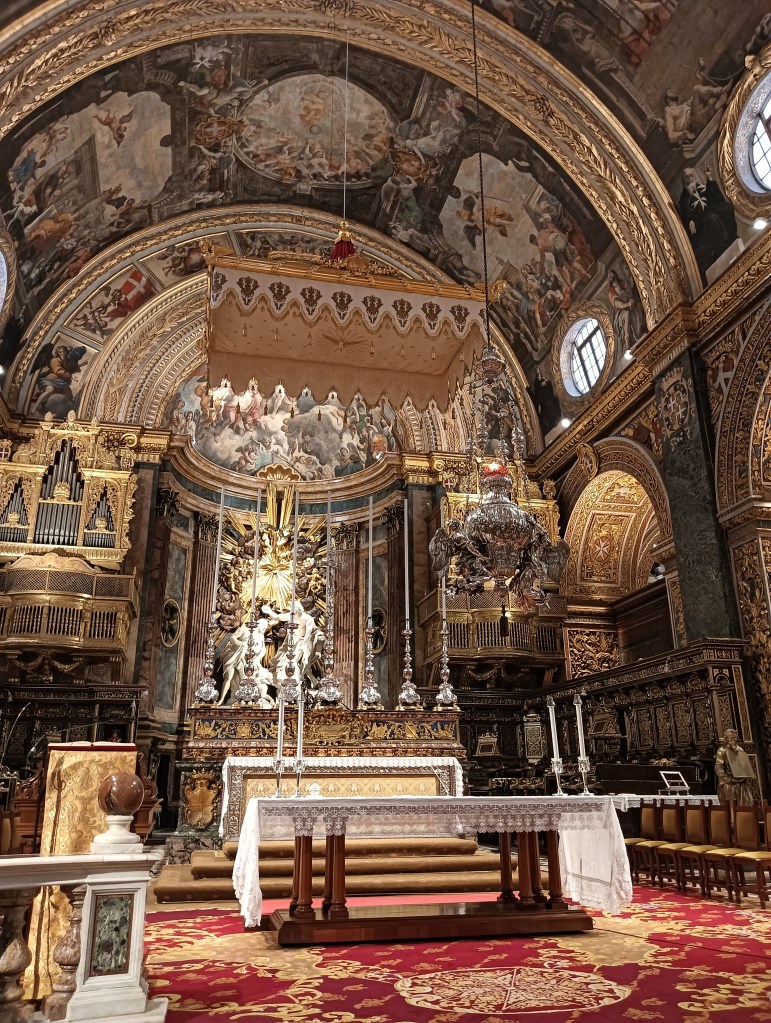
There were symbols everywhere and it was difficult to take it all in. Much of those symbols were skeletons, sometimes with a sickle and an hourglass to represent the passage of time. There were angels of fame, sometimes blowing a trumpet, there were crowns and coronets, armorial shields, weapons, battle flags, halberds, helmets and cuirasses. There was too much to take in and Mr Nomad and I were utterly spell bound and truly in awe of the magnificence and splendor before us. Whilst all of the churches we had visited on Gozo were all amazing, they paled away into the shadow of St John’s Co Cathedral.

Along with the marble floor, the divine ceiling, the Grand Masters crypt, the museum, there are some 9 chapels contained within the church. The Chapel of Our Lady of Philermos stood out, with the other chapels being dedicated to the patron saints of each of the Orders eight langues (or divisons). The Chapel of Langue of Auvergne is dedicated to St Sebastian. The Chapel of Langue of Aragon is dedicated to St George. It was in the alter place within this chapel where there is painting called St George on Horseback. This painting is considered to be one of Mattia Preti’s (1613-1699) masterpieces and there were many of his paintings adorning several altars and on the vault of the church.
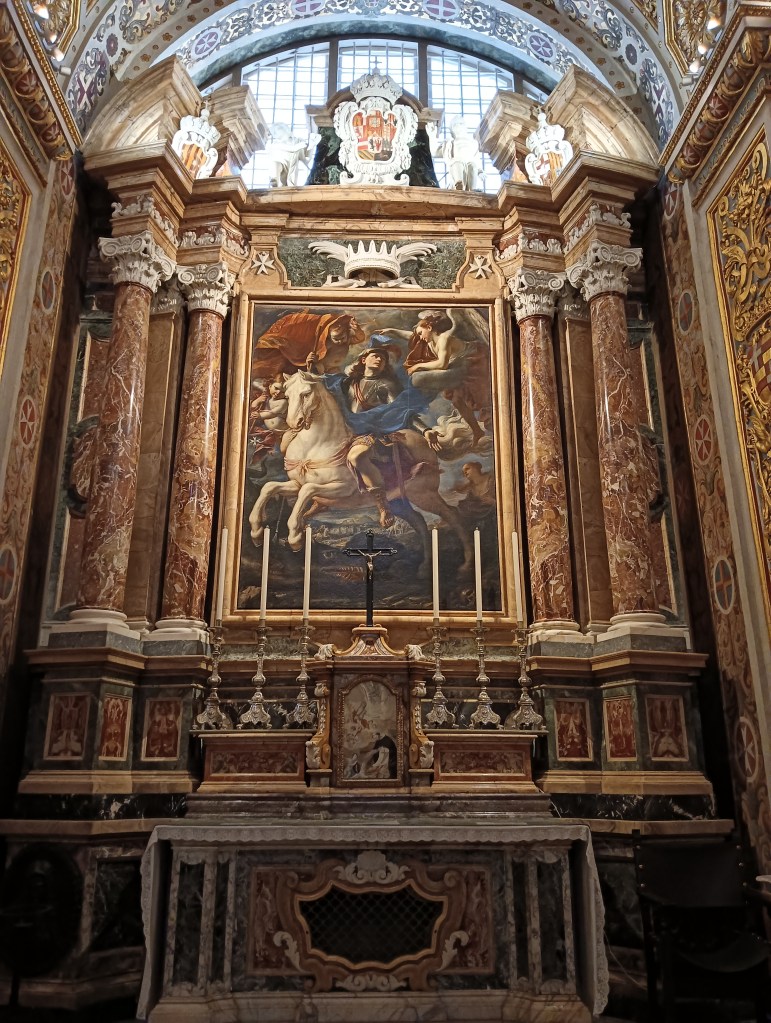
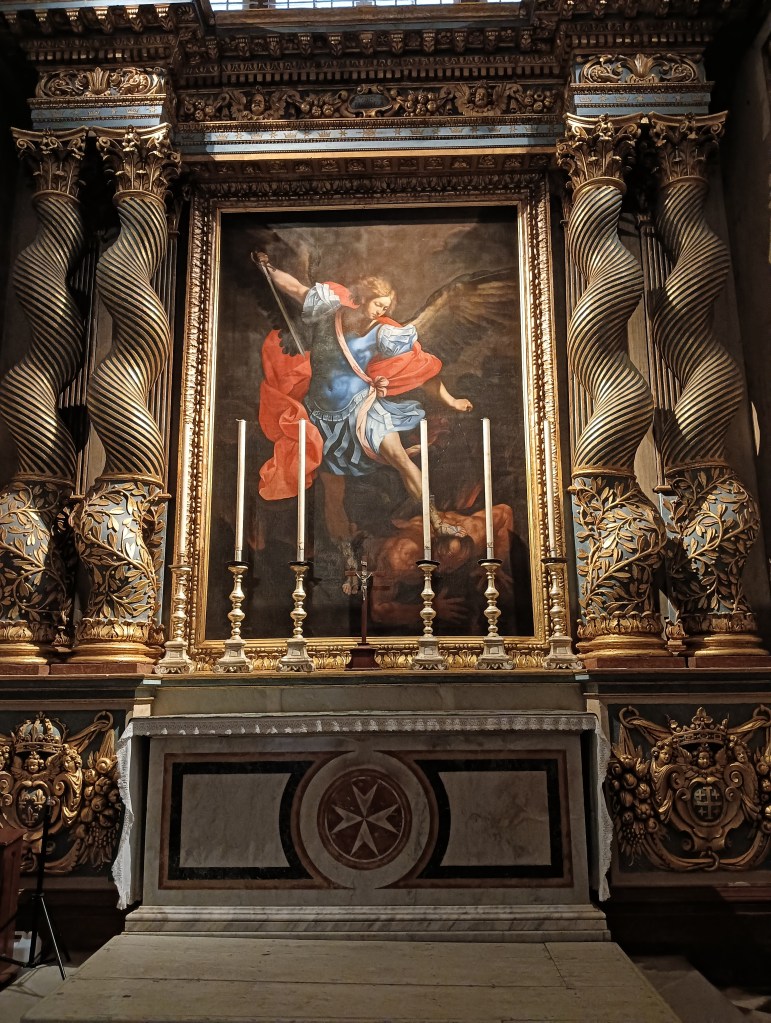
The Chapel of Langue of Castille, Leon and Portugal is dedicated to St James. The Chapel of Anglo-Bavarian Langue also known as the Chapel of Relics is dedicated to St Charles Borromeo. The Chapel of Langue of Provence is dedicated to St Michael the archangel and the Chapel of Langue of France is dedicated to the conversion of St Paul.
The Chapel of Langue of Italy is dedicated to the immaculate conception and St Catherine of Alexandria and the Chapel of Langue of Germany is dedicated to the epiphany of Christ.
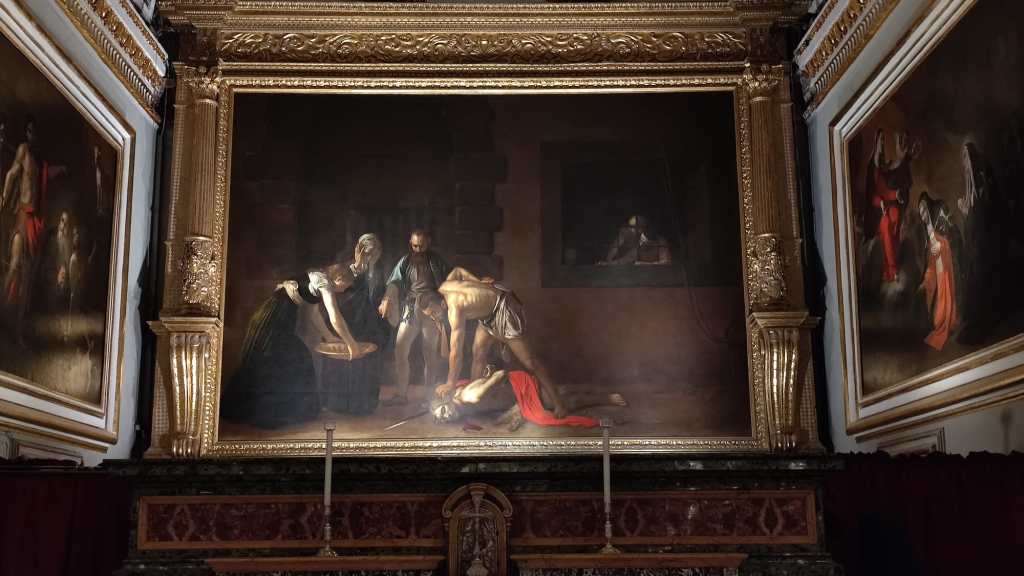
Amongst the art work adorning every area within the cathedral were true masterpieces of the artist Caravaggio. (Michelangelo Merisis da Caravaggio 1571-1610). He painted ‘The Beheading of St John the Baptist’ (1608) and it was displayed with appropriate gravitas for all to see. The other work of ‘St Jerome Writing’ (1607) was also on display and Mr Nomad and I could not believe our fortune at seeing such important work from days gone by. We reveled in these sights, along side the many other tourists who were silent and humbled in the presence of such historically important relics. Neither of us had seen anything like this before and we were utterly enchanted.
St John’s Co Cathedral is also famed for housing some 29 tapestries, some of which are 6.5 metres wide. Seven of those tapestries depict scenes from the life of Christ, seven of them depict the triumph of the Roman Catholic Church and 14 narrow tapestries depict numerous saints. The tapestries were expensive art forms which indicated status and wealth and they were gifted to the church by Ramon Perellos y Rocafull when he was elected a Grand Master in 1697.
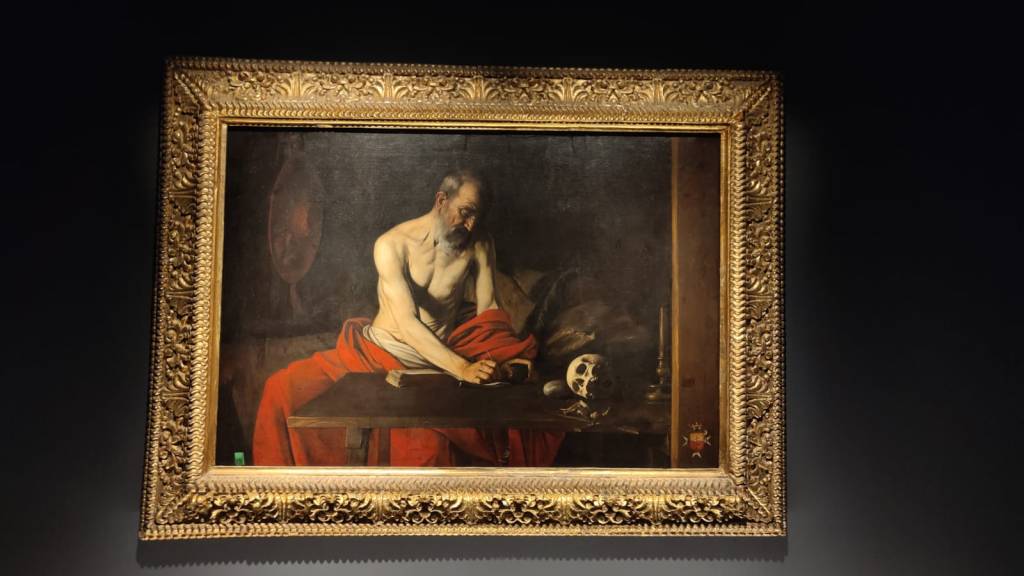
Mr Nomad and I wiled away the hours trying to take in as much as was possible but our eyes could not see everything, much was our wonderment at the scale of the opulence in one building. It was overwhelmingly beautiful. Even a viewing of the Crypt where some of those knights are in their final resting place was incredible. We spent so long admiring this place that little time was left for other sight seeing.
We couldn’t make it to the Grand Masters Palace, or La Sacra Infermia (the hospitaller of the Order of St John). We missed seeing the Fort of St Elmo and the National War Museum which houses the actual George Cross which is visible on Malta’s flag. Valletta was recognised as a World Heritage Site by UNESCO in 1980 and it has been referred to as an ‘open air museum,’ given that as there are some 320 monuments within an area of around 0.55 kilometres, it makes to one of the most concentrated historic areas in the world. Valletta was named as the European Capital of Culture in 2018.
We did pay a visit to a rescue centre for horses and this was a salient reminder of the grim reality of life, and it certainly brought us back down to earth after the glory of the cathedral. Ironically, their premises are next door to yet another church, the Madonna Tal-Providenza Chapel in Siggiewi. The charity started in 2016 but moved to their present location in 2020 which is an abandoned pig farm. I have followed RMJ Horse Rescue for some time over social media after they brought a horse back to life when he was on the brink of death, (Baby) and the work they do for horses on the island is fantastic. They seek to save those neglected and abused creatures from an uncertain future, some of whom come off the racetrack and for those horses that are well enough and rehabilitated, they are transported off Malta to the green countryside of UK. They state that around 300 horses are imported to Malta every year for racing or to compete in polo but when their short lived career comes to an end, many of those animals are destined for slaughter. R M J Horse rescue makes it their mission to save as many as possible from neglect, or from slaughter, care for them until they are ready to be rehomed. They send an average of 7-9 horses to the UK every month. We ambled around while listening intently to the harsh stories of animal rescue, bringing tears to our eyes as they regaled the tortuous stories of some of the residents like Pirate, Renoir, Tom, Urac, Belle, Ti Amo to name but a few. We made a generous donation to continue to support their charitable endeavors.
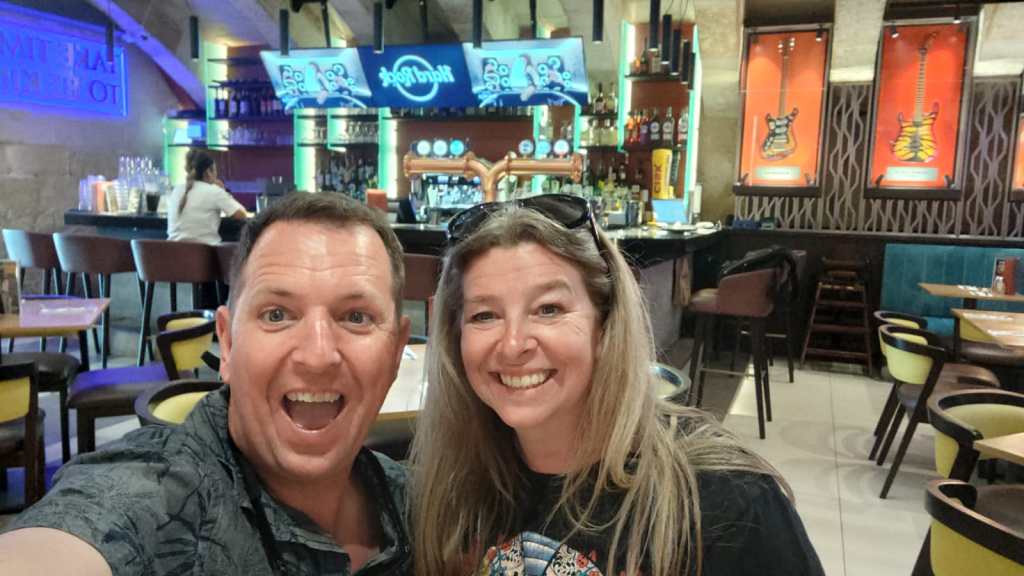
We also made our pilgrimage to the Hard Rock Cafe. We sourced our favourite haunt on the waterfront in the Grand Harbour at the cruise liner terminal. For reasons that remain a mystery, we seem to gravitate towards burger bars and it has now become our own tradition that wherever we find ourselves in the world, if there is a Hard Rock cafe, we are obliged to visit. So we enjoyed a burger and a beer, bought the T-shirt and set about our return trip on the joyful ferry back to our home from home of Gozo.
We appreciate that we barely scraped the surface of what Malta has to offer but it was interesting to see the differences in the islands so closely linked in proximity and in history. Whilst Malta was much busier than Gozo, Mr Nomad and I were thrilled at what we had witnessed in St John’s Co Cathedral and realise that we will have to re-visit in the future to see what other treasures would reveal themselves.
Our adventures on Gozo had been fulfilling and the short day trip to Malta had been intriguing and we begrudgingly returned home. The islands on the archipelago are very worth a visit and our quest for adventure had been thoroughly satisfied.
#faithrestored
#averagepeopleadventures
#nomadicfamilyunitminusone
 Nomadic Family Unit
Hi Folks
Loved our stay in Malta a few years ago .visited twice, so much to see and experience.
Very much enjoy reading your Nomadic Life Travels and have saved them all .
Much love
Greg and Phoebe
xxxxxx
LikeLike