Our average people adventures took us to Gozo this year. This rugged island can be found in the Maltese archipelago in the Mediterranean Sea. It is incredibly rural and much less developed than its neighbour Malta and it is known for its scenic hills, and rolling landscapes. It is an island steeped in history and believed to have been inhabited since 5000 BC when farmers from nearby Sicily crossed the sea to the island. The population is only around 39,287 and the capital is Victoria, also known as Rabat. Both Malta and Gozo are known for being a diving mecca and scuba and free divers throughout the world are attracted to the alluring blue sea along with the undeniably majestic rocky landscapes offering many underwater mystical sights.
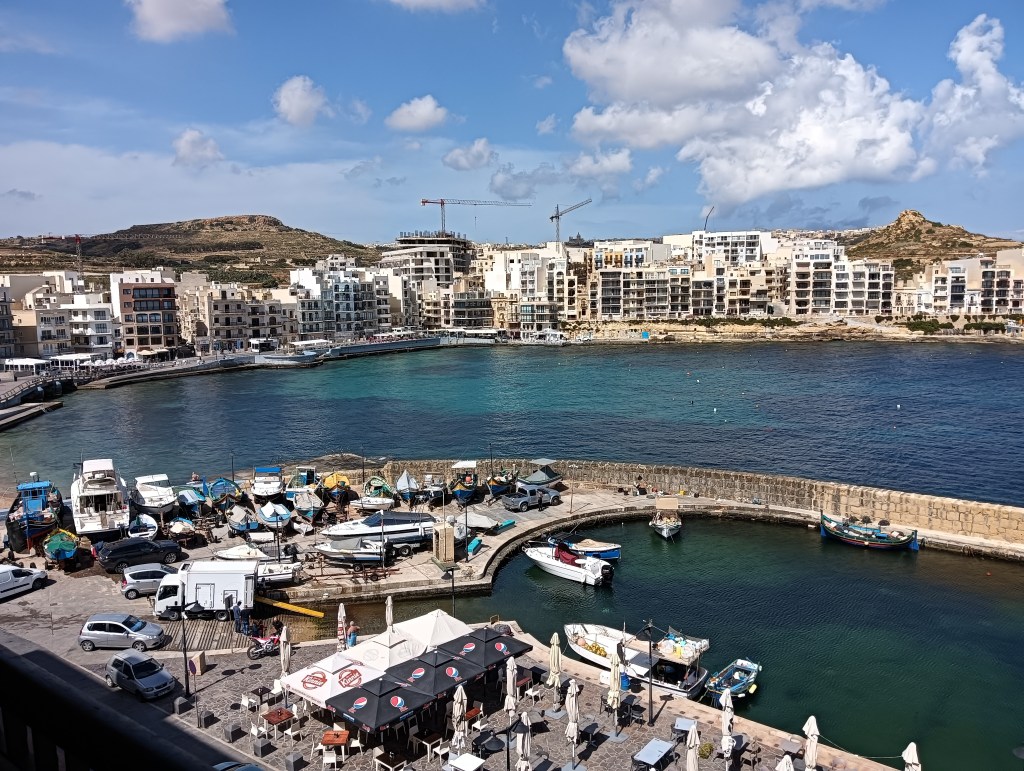
We arrived into the airport in Malta, collected a hire car and boarded a ferry to cross the sea to Gozo. Following our disembarkation at the port of Mgarr, we drove through the winding country roads, taking in the imposing hilly landscape, noting the Statue of the Risen Christ on Tal-Merzug Hill which was placed there in 1970’s and has an altitude of 320 feet, onwards to our hotel in the resort of Marsalform. The island is rather small at a mere 67 square kilometres (26 square miles) which is roughly the same size as Manhattan in New York. It can be found some 6 kilometres north west off Malta and is 14 kilometres in length (8.7 miles) and 7.25 kilometres (4.5 miles) wide. Notable beaches can be found at San Blas and Ramla Bay although the resort where we were staying in Marsalform on the north coast of Gozo had a small sandy bay which was quaint and charming. It was remarkably devoid of human life which was an absolute joy to Mr Nomad and I. To say it was sleepy was an understatement but we had arrived off peak, just before the real summer started and this was by design.

We were confident that we could cover the island in the little hire car quite quickly as the distances were slight, but to our surprise, there was so much to see. The bay where we were staying was very quiet and empty of tourists so it was peaceful and tranquil, exactly what we sought from a holiday. We ventured out from the hotel and immediately came across salt pans at Xwejni. It was fascinating to see how the local people used the rocks to their advantage to make a living from the natural resources available on the tiny island. Gozitan sea salt is extracted manually using traditional methods in summer months between May and August of each year.
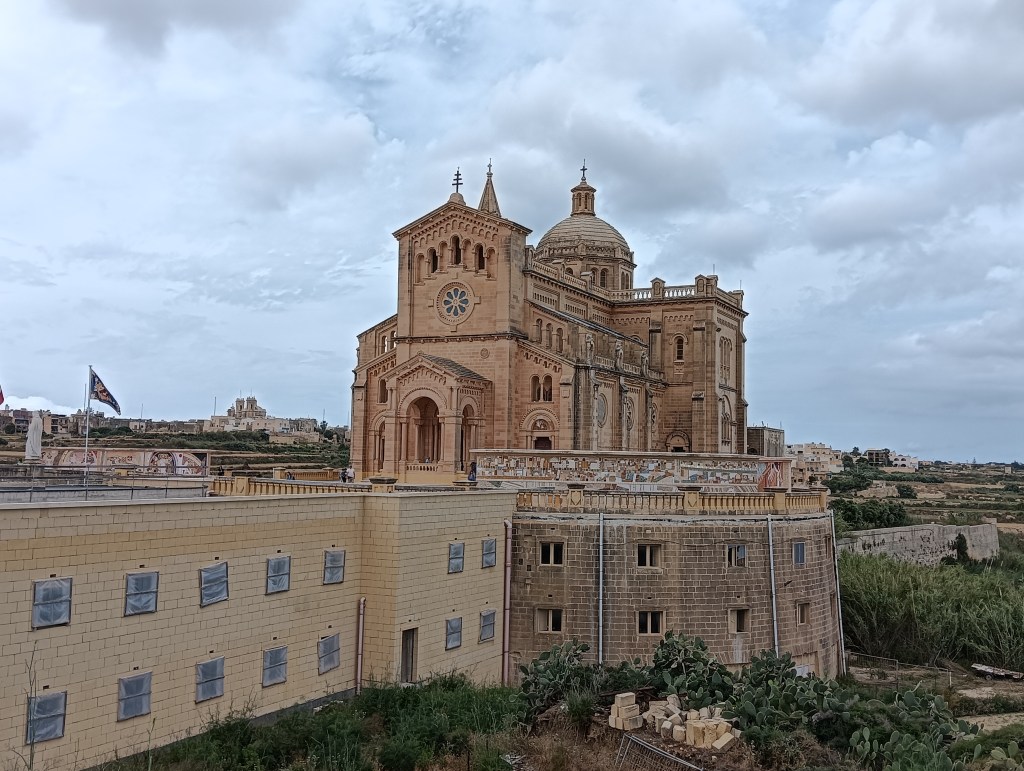
We drove on, taking in the epic landscape which was mountainous but there were many small villages with beautiful buildings along the way. There was an abundance of religious buildings, and many churches and one such place of worship worthy of mention was the Basilica of the National Shrine of the Blessed Virgin of Ta Pinu. This is a Roman Catholic church found in the village of Gharb and was visited by Pope John Paul II on 26th May 1998. Pope Francis visited the church on 2nd April 2022. Legend has it that in 1883, a local woman, Karmni Grima was walking past the run down church and heard a voice asking her to recite three hail Mary’s. Over the following years, miracles were attributed to the Grace of Our Lady of The Assumption to whom the church was dedicated. Francis Portelli was said to have heard a voice coming from a painting and Francis Mercieca was a devout of Our Lady of Ta Pinu and was said to have healed people. Work took place on the church in 1920 and it was consecrated on 31st August 1932. It was built in a neo-romantic style, contains 6 mosaics, 76 coloured windows and the bell tower is 61 metres high. Whatever your religious beliefs, the building itself was fantastic and Mr Nomad and I could only marvel at its splendour.
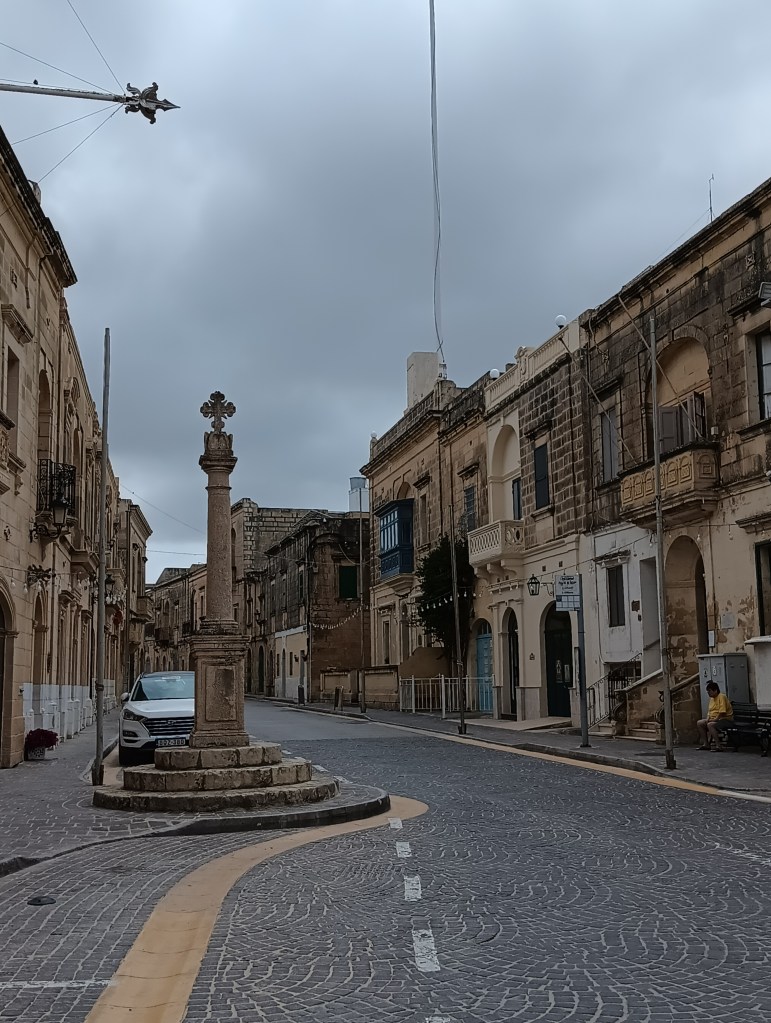
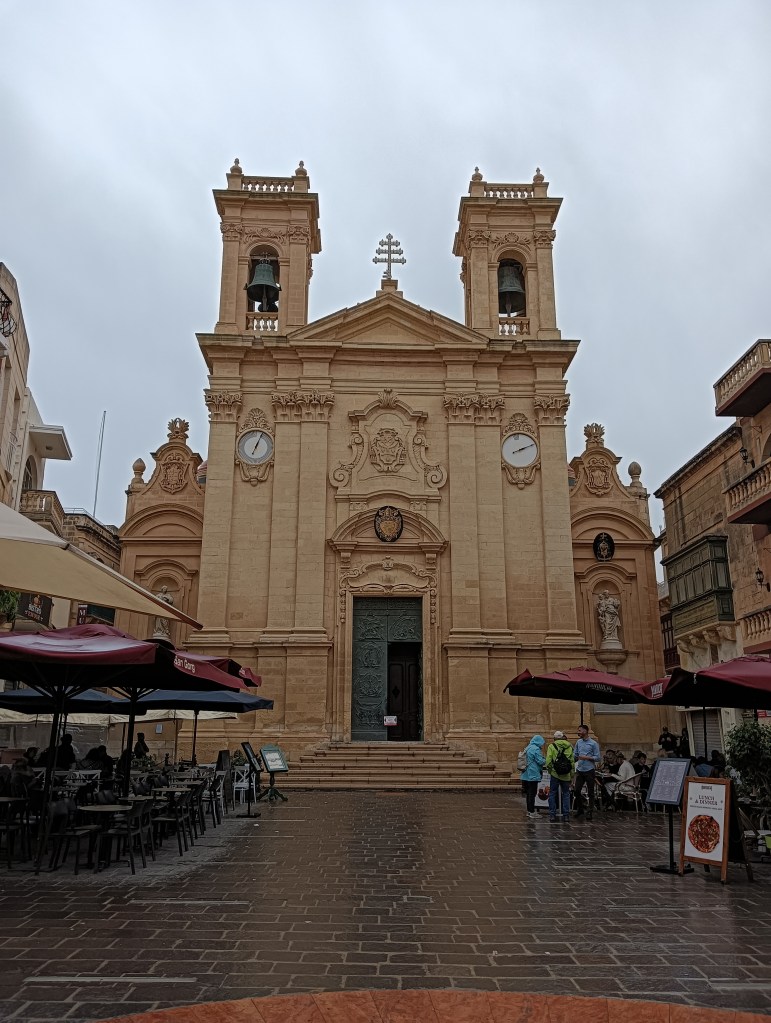
Our onward travel took us through numerous traditional villages and travelling through a maze of old narrow streets and alleys brought us to another church that being St George’s Basilica. This is an historic Baroque church built between 1672 and 1678. The original church was the main Roman pagan temple in Gozo which was converted by a missionary into a Christian church dedicated to St George. It was rebuilt several times during the middle ages and the basilica has eleven side chapels and is still very much a place of worship. This church was also a glorious sight to behold in its majesty and the abundance of religious buildings became the theme of this holiday.
A visit to the capital of Victoria was no exception – the most amazing but intimidating Citadel perched on the top of a huge hill was reminiscent of a motte and bailey castle in England and it was fascinating to learn that the citadel had been inhabited since the bronze age. During medieval times, the acropolis was converted into a castle. In 1551, Ottomans invaded and ravaged Gozo enslaving many of its 5000 inhabitants and taking them to Tarhuna Wa Msalata in Libya. The island was repopulated between 1565 and 1580 by mainland Maltese people undertaken by the Knights of Malta.
In 1599 to 1622, the citadel underwent a major reconstruction transforming it into a gunpowder fortress. The northern walls were left intact and they still retain a largely medieval form. The fortress briefly saw action during the French invasion and subsequent uprising in 1798 but the fort was surrendered without much of a fight. It remained a military installation until it was decommissioned by the British on 1st April 1868. This formidable and imposing structure now contains churches and other historical buildings within its walls including law courts, a cathedral of the Assumption, a fountain, two chapels and a commemoration of the naming of the city as Victoria, the then Queen in 1887. The citadel has been on Malta’s tentative list of UNESCO World Heritage Site since 1998. Mr Nomad and I had sought refuge in the citadel as the weather on the day of our visit to Victoria was questionable but the fortified castle walls were so high, and the wind so strong that I feared being blown over the city walls to a premature death. It was stated on the numerous information boards that when the Ottomans sacked the citadel, many of its occupants had attempted to escape by trying to scale down these walls but it wasn’t difficult to understand why much of the population of Gozo was wiped out during the 16th century.

Aside from the spectacular churches, basilica’s, cathedrals and the imposing citadel, Gozo had so much more to offer. We drove along the coast and visited the resort of Xlendi. Whilst there was a lack of sandy beaches, there were many splendid hiking opportunities along the imposing cliffs. We trekked up the cliffs and were astounded by the stunning views in Dwejra on the outskirts of San Lawrenz, where the Inland Sea could be found, and the site of the Azure Window.
Another interesting site was the Dwejra Tower, a 17th century coastal watchtower built by the Order of St John. They were a Catholic Military Order founded in the crusader kingdom of Jerusalem in the 12th century. Their headquarters were here until 1291 and thereafter, they were based in Kolossi Castle in Cyprus (another place visited by Mr Nomad and I), then Rhodes, Malta and St Petersburg.

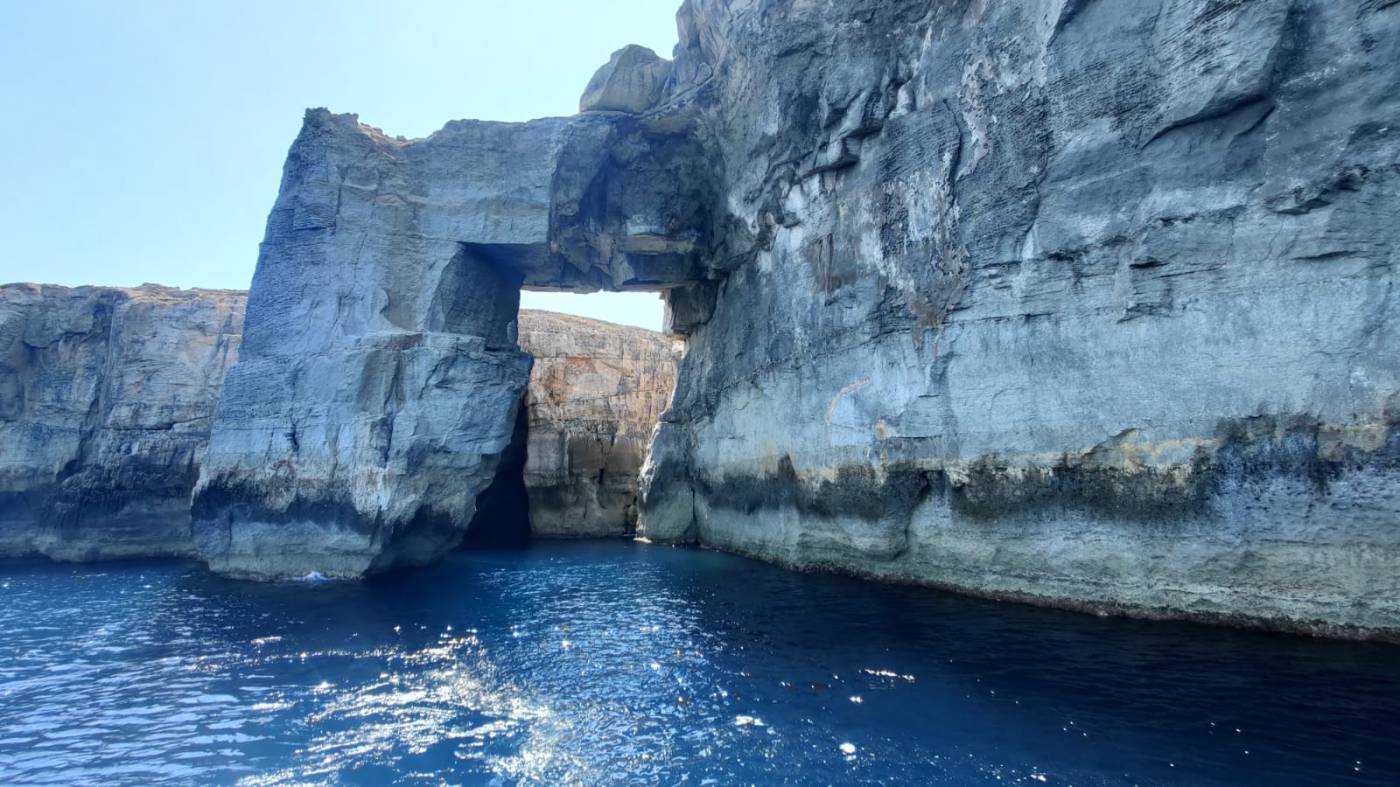
The Azure Window in Dwejra, San Lawrenz was a natural 28 metre high limestone arch, a remarkable natural feature made famous in Game of Thrones until it collapsed into the sea on 8th March 2017. It could be seen in a Dothraki wedding scene in Game of Thrones, and it also featured in the film of The Count of Monte Cristo in 2022, and it was in the film of The Clash of the Titans in 1981, and whilst the actual arch is no longer there to be seen, the rock formations are still rather magnificent.
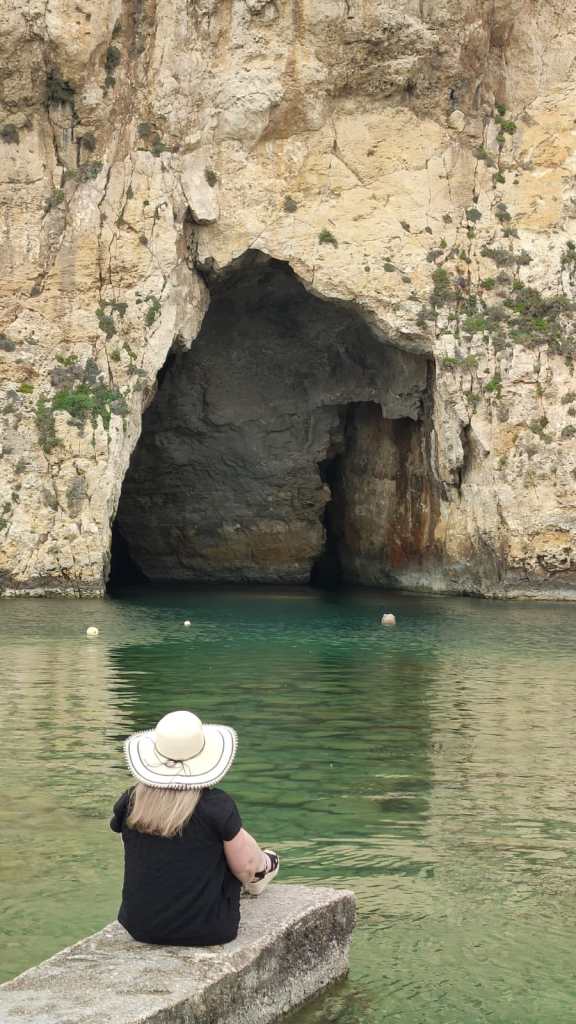
Mr Nomad and I took a tiny boat trip in a tiny boat in the Inland Sea, and out into the Mediterranean Sea to take in the seismic cliff faces, to take a look at the formidable Fungus Rock and to see where the Azure Window once was. The sea itself was deliciously blue and it was easy to see why scuba diving was such a popular pastime on this intriguing island.
Our journey around Gozo did take us to the red sands of Ramla Beach which was sleepy and peaceful and provided us with a hefty dose of relaxation, and a swim in the dreamy water. It was fairly hot whilst we were there although we were on the end of a storm on two days during the week we were there, hence the beach days were limited.

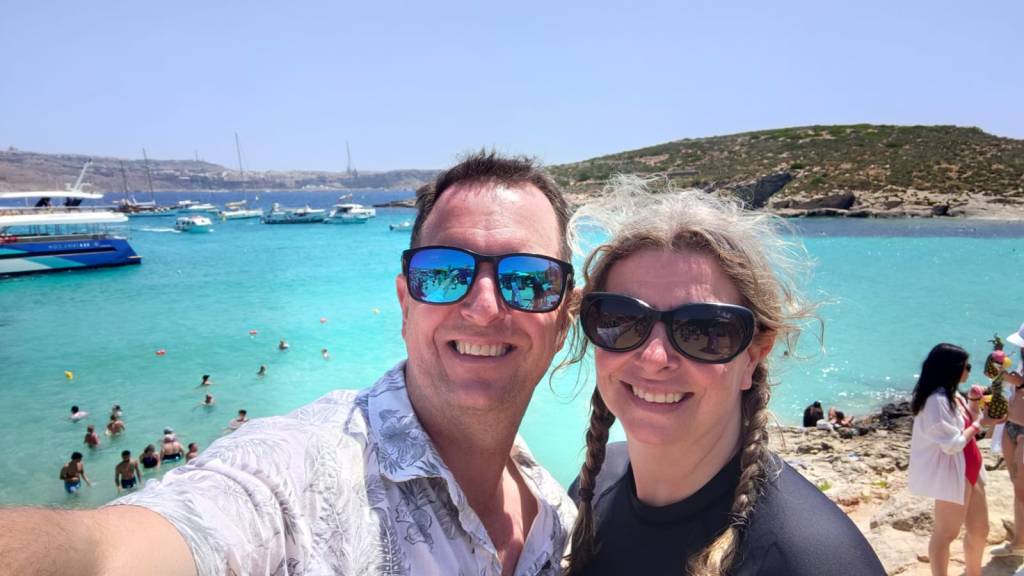
We did manage to squeeze in another boat trip around the coast with the small island of Comino the destination. This tiny island is famed for its blue lagoon – a bay with crystal clear azure water. Comino is only 3.5 square kilometres in size (1.4 squre miles) and is named after the spice Cumin which grows on the island. It is a protected nature reserve and a bird sanctuary with no tarmac roads. We arrived there on a boat and enjoyed a lovely lunch, and then enjoyed swimming in the heavenly waters of the blue lagoon.
The boat took us only partially around Gozo as the wind had become quite tempestuous so the trip was somewhat shorter than anticipated. The usually placid Mediterranean Sea became quite stroppy and a view was taken that it was too much of a struggle for the boat that we were on to continue around the rocky coastline. The weather however, did not spoil our adventures though as this small island surprisingly had so much to reveal.
One of those such days saw us take a trip to Ta Kola Windmill. This was found in the village of Xaghra. The windmill was built in 1725 and became a museum in 1992. It was a unique relic from a breadmaking past, providing a fascinating insight into the lives of Gozeans.
On the edge of the Xaghra plateau, facing south east came another fascinating insight into Gozo but more from an ancient era. In the mistaken belief that we had exhausted all of the sights that Gozo had to offer, we stumbled across the Ggantija’s Temple. This is loosely translated as “belonging to the giants.”

These enormous rocks were actually megalithic temples from the neolithic era (c 3,600-2,500BC). This means that these temples are approximately 5,500 years old making them older than the pyramids in Egypt. The site is listed as a UNESCO World Heritage site and has been since 1980. It is believed that the temples are elements of a ceremonial site used in fertility rites and it was not discovered until excavations commenced in 1827. The ruins thereafter fell into decay and there is little remaining of the original structures. Work is being undertaken to preserve them but Mr Nomad and I were astounded at the rich history that this island offered. When the ancient temples had been discovered, they were the subject of graffiti which itself, has become a sign of the history ever present given that some of it was dated from the early 1800’s. Of course, these days, graffiti is not permitted and is frowned upon but it was still a real point of interest for us.

Gozo is not very developed at all but that is not to say the locality is stuck in the past, and it still holds its traditional and rustic charm, unspoilt by an influx of visitors. Mr Nomad and I joined local folk at a local festival, a Strawberry Festival which was wonderful to be part of and it was a great feeling that there were no other tourists around. We thoroughly enjoyed joining in with the local people in their customs and practice. Although we were strangers in their midst, the Gozeans were friendly and welcoming and treated us like their own.
We did feel that whilst there, it would be rude not to visit Malta, the island of our arrival but after the travelling around Gozo, our time spent in Malta was limited to a day trip. However, we got to board the ferry once more and you recall the theme of religious buildings? More was to come…
#islandofintrigue
#alwaysanadventure
#somuchtosee
 Nomadic Family Unit
Leave a comment