

Having spent many of my formative years in Germany, when Mr Nomad was called to work across the waters of the North Sea in the depths of Deutschland, I couldn’t help but take a quickie weekend to join him. This fleeting trip also coincided with Easter so we took the opportunity to enjoy a long bank holiday weekend away with different scenery.
And different it was. This excursion took us to Paderborn. This is a city in eastern North Rhine-Westphalen in Germany. The name of the city derives from the river Pader and Born, an antiquated German term for the source of a river. The river Pader originates from more than 200 springs which can be found near Paderborn Cathedral, where St Liborius is said to be buried.

The city itself is a pleasant mix of older style buildings with heavily pronounced traditional beams like the Town Hall, in the native tongue known as the Rat Haus, an architectural landmark alongside more modern restaurants and bars, coffee shops, bakeries and charcuterie selling shops. German cuisine is known for bread, pastry products and its stunning cakes and Mr Nomad and I delighted in going for ‘kaffee und kuchen’ (coffee and cake) and sampling the most delightfully light and creamy sponges. The country is also renowned for beer and sausage, and we did partake in both currywurst and bratwurst which could not have been any more divine. The odd cocktail and jug of beer was also consumed.

In 1914, Paderborn military camp was turned into a prisoner of war camp named Sennelager and during World War II, the city was bombed by Allied forces resulting in around 85% destruction. After it was reconstructed in the 40’s and 50’s, Paderborn became a major industrial seat in Westphalia. It has a population of around 144,000 and around 10,000 of those are members or relatives of members of the British Army. The British Army did not withdraw from Germany until 2020, although there is still a small British presence. Interestingly, the city is twinned with Bolton!

The focal point must be Paderborn Cathedral (Hoher Dom Zu Paderborn) which was a huge regal looking building, dedicated to Saint Mary, Saint Kilian and Saint Liborius. The cathedral had ancient beginnings and it was said to have emerged from the cathedral monastery founded in 799 by Charlemagne and Pope Leo II, but the first build was then destroyed by fire in 1000AD. The second build of the cathedral was then destroyed in around 1058 again by fire. Part of the Crypt that remains to this day can be traced back to 1100AD although the main cathedral suffered severe damage in 1945 after the place was heavily bombed in the Second World War.
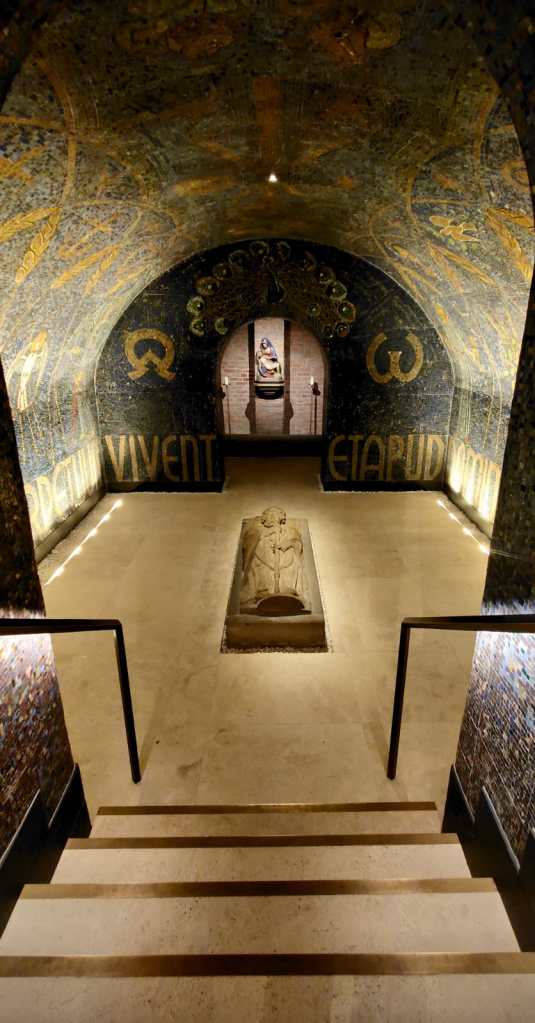
It had been built in an early Gothic style but in the 17th century, those Gothic interior features were replaced with Baroque art work. The crypt contained the tombs of the Archbishops of Paderborn and relics of Saint Liborius and whilst being a stunning and majestic building, it was an absolute pleasure to view the main place of worship in Paderborn.

Mr Nomad and I went exploring and happened across a rather splendid castle. Germany has become well known for its rich history and monumental castles and Wewelsburg Castle, a renaissance castle with an interesting triangular castle was an imposing and formidable building with a dark history. It is found in the village of Wewelsburg, a district on the town of Buren. The structure was first mentioned in 1124, but it was not continually inhabited until around 1301. In its current form, it was built in or around 1603-1609 and at first, was used as a secondary residence of the Prince-Bishops of Paderborn. It was then taken several times throughout the Thirty Years War. In 1646, it was occupied and then razed by Swedish troops, and in 1650 in was rebuilt by Prince Bishop Theodore Adolf Von Der Recke and his successor, Ferdinand Von Furstenberg.

In 1631, there were two witch trials and Mr Nomad and I were fascinated to see the remains of torture devices. During the Seven Years War (1756-1763) the dingy basement probably was used as a prison and then in the 18th and 19th centuries, it fell into disrepair. In 1802, it was transferred into the ownership of the Prussian State and in 1815, the North Tower was destroyed after being struck by lightening. In 1924, it became a cultural centre and by 1925, had become a museum, banqueting hall, restaurant and youth hostel.
Following on from the witch trials and the sobriety of the prisons, a further darkness enveloped this structure. In 1935, Heimrich Himmler, a leading member of the Nazi party leased the building and it became an SS school and a central meeting place for SS. SS is ‘Schutzstaffel’, the elite military wing of the Nazi party. He was fascinated by mysticism and the occult which was why he chose this particular castle as his home. The castle became known locally as the Nazi Temple of Doom and it was revered as a place of mystical power. It certainly had a spooky and eerie feeling about it.
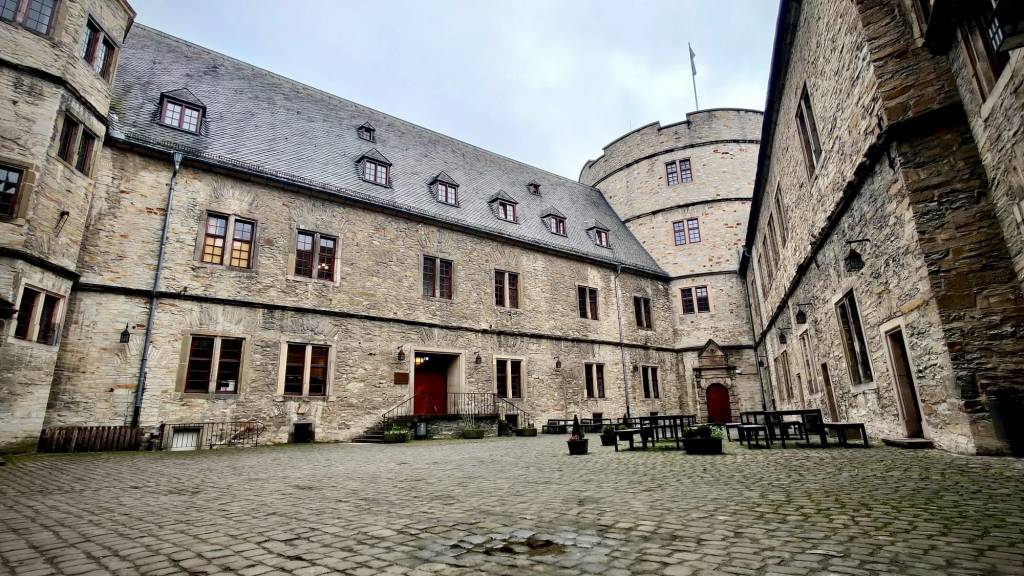
The history of the castle is marked by constant destruction yo-yoing with reconstruction and even the SS attempted to destroy it by blowing it up at the end of the war but the castle still survives to this day. Perhaps there is an element of immortality with this enduringly sinister but somewhat awesome structure that refuses to be put down. It was reconstructed in 1948 and 1949 by the district of Buren, in 1950 the youth hostel moved back in and 1973-1975, the North Tower was rebuilt.
Given that 2025 has coincided with 80 years since VE Day (Victory in Europe), then little more needs to be said about the background of the castle but today, it is a mighty and imposing building worthy of any visit.
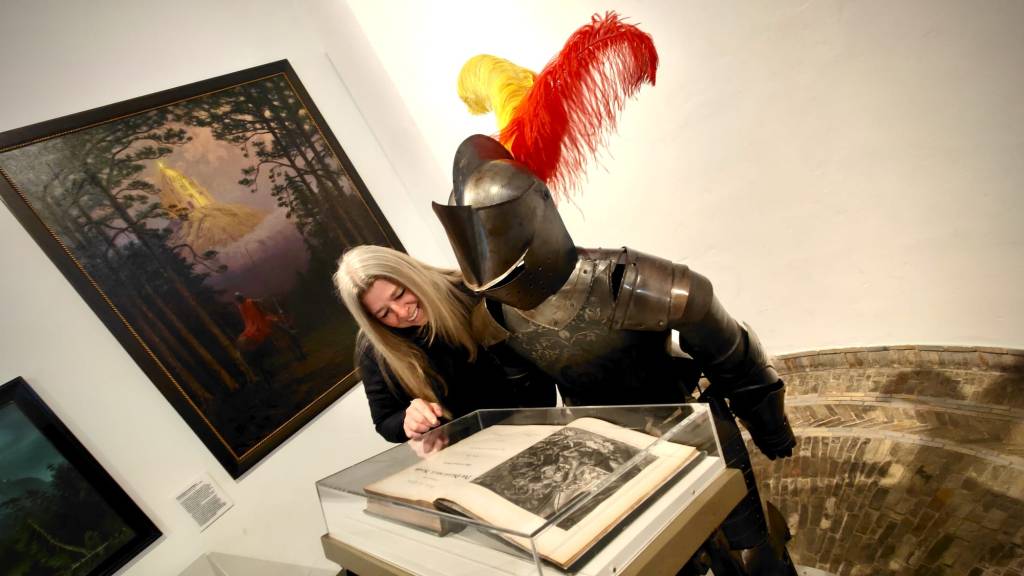
The castle has become a centre for archaeological excavations in the area and there was more than enough history on view in this rather fascinating if not at times, creepy fortress. Following excavations in 1986/1987, remnants of life in the middle ages became apparent and such reminders were on display throughout the floors of the structure, offering a glimpse of days gone by and displaying relics from the Germanic countryside which were not wholly unlike the English countryside. There were however, very little reminders apparent from the Second World War and the horrors that revealed themselves when liberation came.

Whilst we were in this delightful country, we took the time to entertain ourselves with a local Easter festival. Mr Nomad and I ingratiated ourselves within the community and revelled in a local tradition where huge wagon wheels were stuffed with straw, set alight and sent tumbling down a hillside. It was a very dramatic celebration and the myth was that the distance travelled by the wagon wheel represented how likely there was to be a successful harvest. It was a little mystifying but what a glorious sight to see these burning wheels bouncing down the hillside with a backdrop of an enormous bonfire and followed by a resplendent firework display. There was a rather pagan feeling about it all but another German sausage washed down with a German beer made the evening unforgettable.

Whilst in Germany, Mr Nomad and I indulged in a trip down memory lane and the hire car was put to use by visiting places where I lived as a child. One such place where we did a drive by was Hohne where we had the opportunity to visit old friends. This also took us past the infamous Bergen Belsen concentration camp. Given the restrictions on time, we could not stop, but at various times in the past, this location has been visited by us but this also represents a darkness in the history of this otherwise magnificent country and will most definitely be the subject matter of another Blog in the future.

Until that time, the Easter weekend had been enjoyed thoroughly and a whistlestop tour had been vibrant and an interesting change of scenery.
#lightalwaysfollowsdarkness
#livelife
#averagepeopleadventures
#nomadicfamilyunitminusone
 Nomadic Family Unit
Leave a comment