
Mr Nomad and I have the privilege of having friends in Cyprus who had invited us to enjoy Christmas with them. Given the miserable greyness of England in December, we cordially accepted their generosity and after depositing the furry Nomadic children with the Nomadic grandparents, we jetted off to enjoy Christmas in the sun.
The Republic of Cyprus located in the eastern Mediterranean Sea in South East Europe did not disappoint. It is the third largest island and third most populous island in the Mediterranean, and with its sub tropical, semi arid climate, one can’t fail to see its popularity as a holiday destination. With Nicosia as its capital, there are two large ports at Limassol and Larnaca, and many glorious beaches for sunseekers. The north east of the island is ‘de facto’ governed by the self-declared Turkish Republic of Northern Cyprus.
The island itself lies east of Greece, north of Egypt, south of Turkey and west of Lebanon and Syria. It has an important strategic location and in days gone by, it has been occupied by major powers including the Empires of Assyrians, Egyptians, Romans and Persians. There has been Venetian rule and Ottoman rule, amongst others. There is a wealth of archaeologically important sites littered across the island, relics of those long forgotten times but the island’s location is still just as significant in modern times. The island was under UK administration from 1878 until annexation in 1914. Cyprus remains a key military base for Great Britain, and the Sovereign Base Areas of Akrotiri and Dhekalia remain under UK control.
The Republic of Cyprus is effectively partitioned into two main parts: the area under the control of the Republic in the south and west, which is around 59% of the island, and the north; administered by the self declared Turkish Republic of Northern Cyprus which is about 36% of the island. Around 4% of the island is in a United Nations buffer zone.
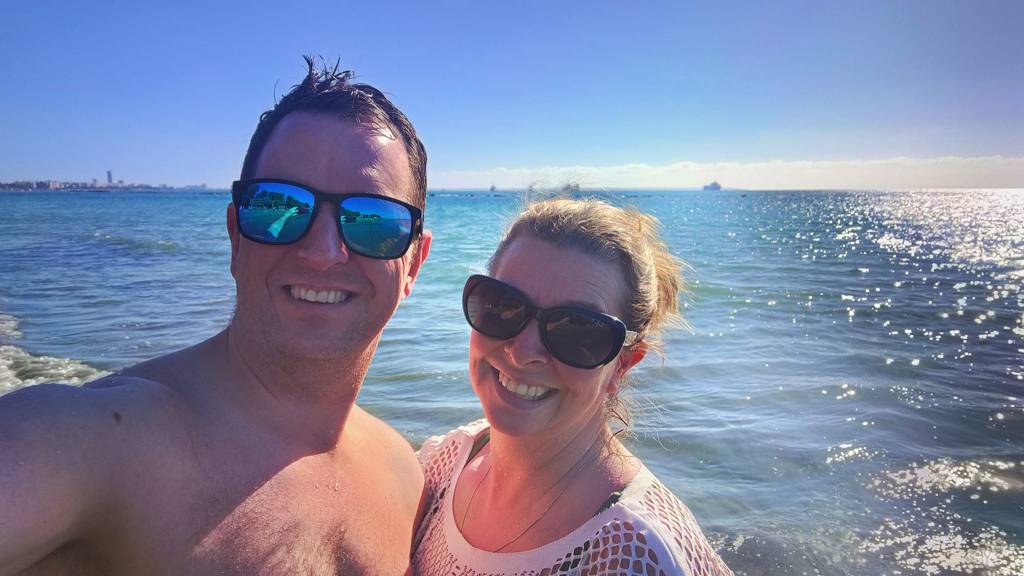
Both halves of Cyprus have much to offer including maximum relaxation a world away from the hustle and bustle of normal life. Christmas day itself was spent catching some rays on a beach close to Limassol. The sun was beating down, bringing with it a yearned for warmth which had not been forthcoming back in a wintery England. Our Nomadic friends, Mr Nomad and I enjoyed a dip in the sea too which although a little cool, was refreshing and energising. It was just enough activity to build up an appetite for a Cypriot Christmas dinner which included lamb kleftico and chicken souvla.
Whilst Cyprus is renowned for its hot temperatures, we took a trip to Troodos Mountains, the largest mountain range found centrally on the island. The tallest mountain within the range is Mount Olympus and it is the only place on the island where snow can be found. Thankfully, on the day we visited the mountains, there was no snow but the temperature was markedly lower than everywhere else. We warmed ourselves with glasses of mulled wine. It is well known for its skiiing, along with its Byzantine churches and monasteries. It is exceedingly beautiful, if not rugged and the evergreen trees were in distinct contrast to the almost desert like conditions across the rest of the landscape.
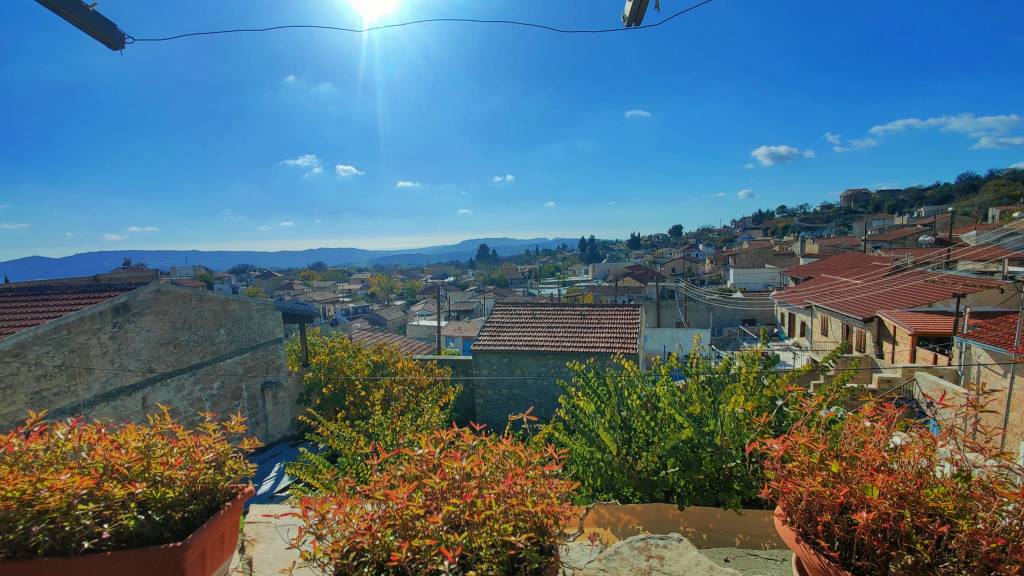
We journeyed on to the quaint village of Vasos where we sucked in the breathtaking scenery, and partook in a traditional Greek Meze washed down by the locally produced wine.
After spending time in the Republic of Cyprus, populated mainly by Greek Cypriots, we ventured up north and crossed the border into the Turkish Republic of Northern Cyprus, occupied by Turkish Cypriots. The car journey took us through the buffer zone, a creepy no man’s land between the two hostile territories and crossed into Famagusta.
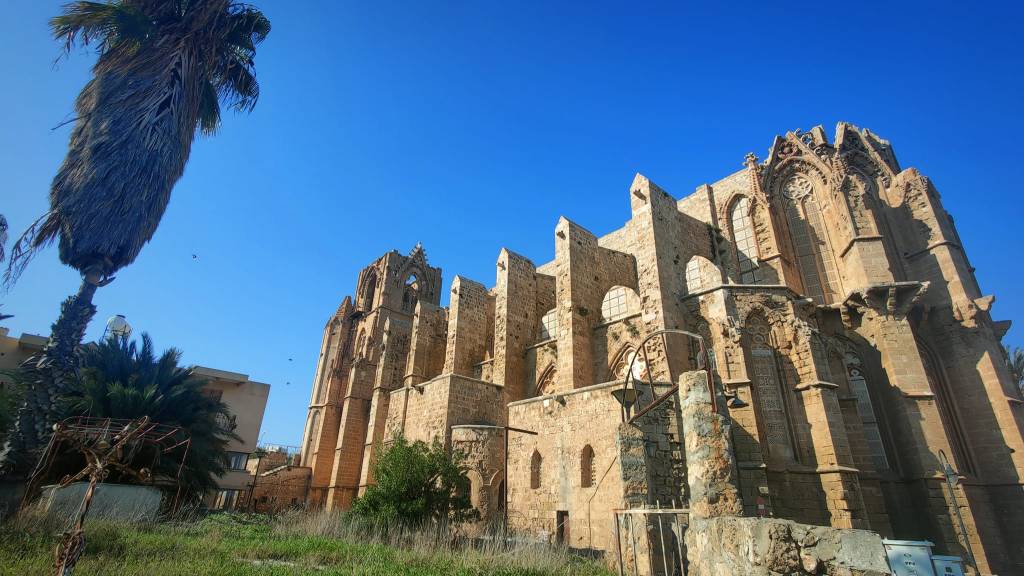
A stroll around the city revealed delightful archaic relics of the past and we were stunned by a ruined Venetian Palace harking back to the 16th century and the ruins of a church found in the centre of the city albeit surrounded by day to day trappings of a modern era including shops, bars, car parks and such like. The church of St George of the Greeks/Church of St Symeon was built in or around 1360’s by the Lusignans and was an interesting dilapidation which we delighted in climbing over, notwithstanding that it was a rare example of an orthodox church. There were no barriers or fences preventing access so we reveled in combing over the ground with a fine tooth comb in the misguided belief that we would be lucky enough to unearth coins or pottery, or some other treasure not already pilfered by the locals.
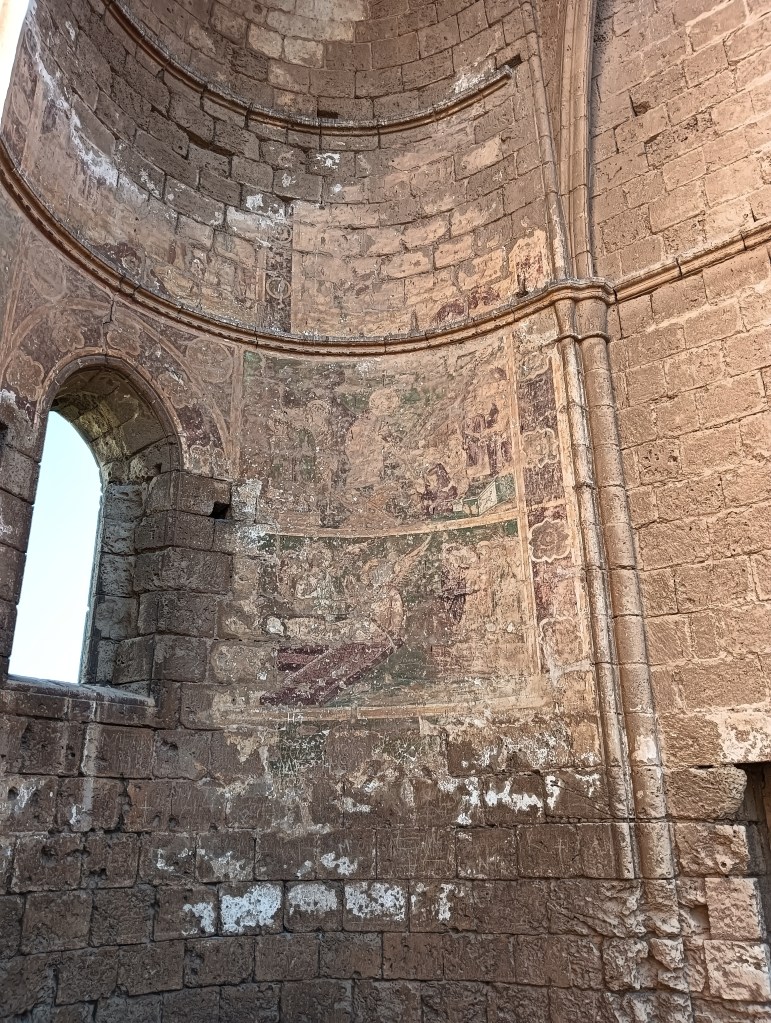
Contained within that church was a chapel assumed to be that of St Symeon. There was still evidence of murals upon the ancient walls which was incredible given that the church was hundreds of years old and not protected in any way from the elements or its surroundings.
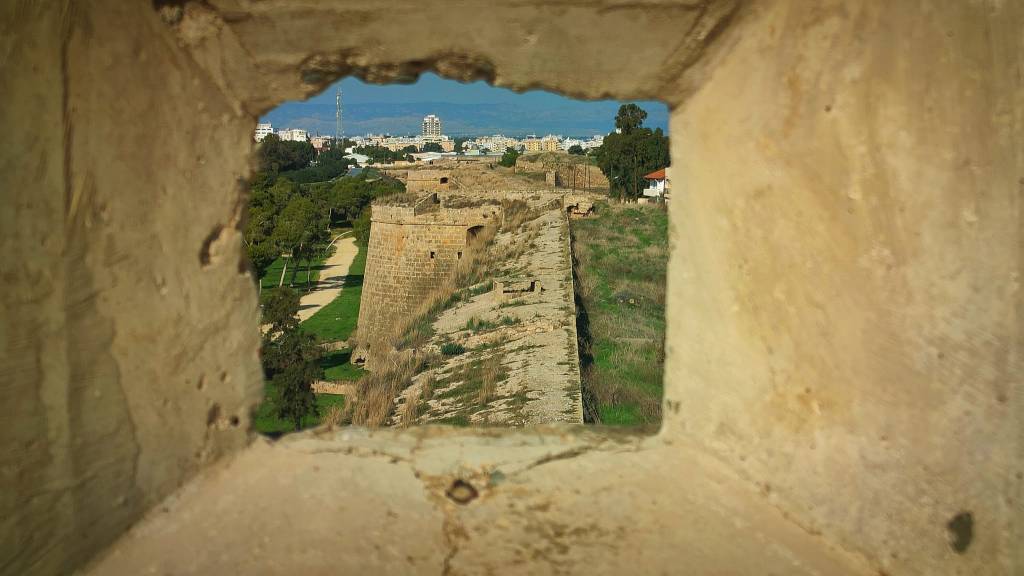
We were also able to clamber up the city walls, and view the area from above. The scenery was stunning with a real mix of ancient and new, closeted by the imposing castle walls but all bordered by beautiful beaches.
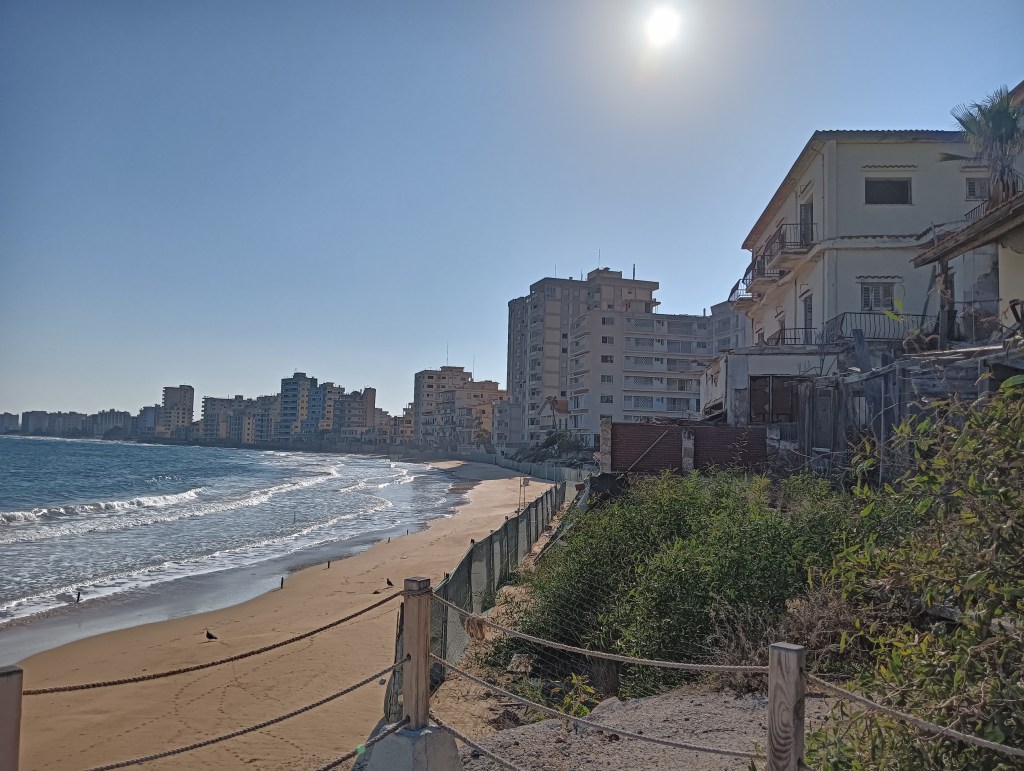
Hiring of bikes took us on a whole different journey to the ghost town of Varosha. In its hey day, this had been the most glamourous of sea side resorts, the number one party hotspot, much like the town of Ayia Napa in the south. It boasted of celebrity guests such as Elizabeth Taylor, Richard Burton, Raquel Welch, Brigitte Bardot and Sophia Loren but it was abandoned during the Turkish invasion in 1974.
There had been considerable disagreement between the two prominent ethnic communities, that being Greek Cypriots and Turkish Cypriots for some years. Although the Turkish Cypriots favoured continuing British rule, they then demanded annexation of the island. Violence ensued throughout the 1950’s and in 1960, Cyprus was granted independence. In 1963-1964, there was an escalation of violence and more than 25,000 Turkish Cypriots were displaced and brought to an end the Turkish representation of the Republic. On 15th July 1974, the Greek Cypriots staged a coup d’etat but this action precipitated a Turkish invasion on 20th July 1974. The Turkish air force began a bombing campaign and paratroopers were dropped into the area between Nicosia and Kyrenia. Some three days later, when a cease fire had apparently been agreed, the Turkish landed 30,000 troops on the shores of Varosha and and proceeded to capture Kyrenia.
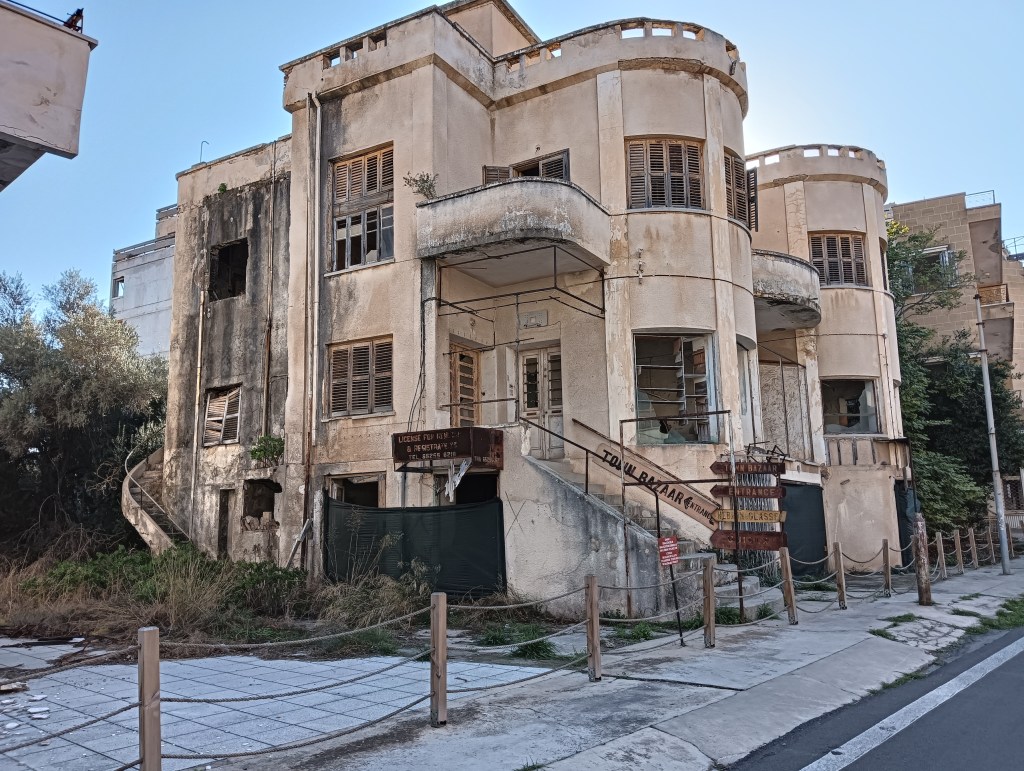
The junta in Athens fell from power and after peace negotiations, the Turkish government reinforced Kyrenia as a bridgehead and started a second invasion on 14th August 1974. International pressure led to a ceasefire but 36% of the island had been taken over and 180,000 Greek Cypriots were evicted from their homes in the north. Around 50,000 Turkish Cypriots were displaced to the north and settled in properties left behind by Greek Cypriots. Varosha was abandoned and remains deserted to this day. A once bustling and lively town, frequented by the rich and famous has fallen into dereliction and is a salient reminder of the tensions that are still very much alive. It was only in 2017 when people were allowed to enter the area.

A separate Turkish state was established in 1983 and the area remains in dispute to this day. The occupation is viewed by the international community as illegal under international law and attempts have been made to reconcile the island but to date, such attempts have been unsuccessful.
Varosha was as eerie as the archaic ruins of the Venetian Palace, and the numerous churches and monasteries that litter the island but for very different reasons and it was disturbing that such animosity is still very much in existence. It was an interesting experience to cycle around the deserted town and in some respects, almost surreal but uncomfortable and bewildering when trying to comprehend the terror which must have been felt by many as they fled for their lives. Bullet holes in the walls of the derelict hotels were apparent, and the buildings that were once popular and busy shops, pubs, clubs and bars were all run down and dilapidated. It was almost like a movie set and completely unbelievable that such places even exist in the modern age. Whilst Christmas is traditionally a time of peace and goodwill, this glimpse of troubled times was a reminder of the cost of such freedoms that many of us take for granted.
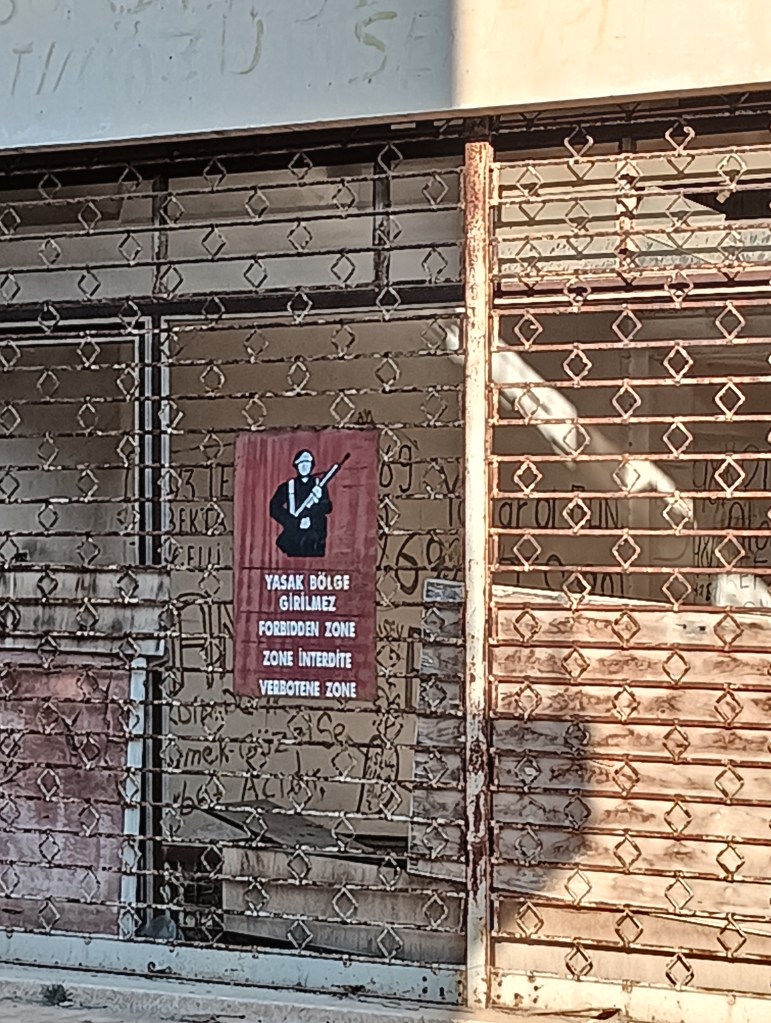
Silently cycling through the haunting streets was solemn and many areas were still out of bounds to the public and guarded by Turkish forces. Photographs were forbidden in many areas.
Our journey in Cyprus ended in Paphos, where the second largest airport on the island can be found. We had time to kill before we were whisked away back to our homeland so we wiled away the hours wandering through some recently discovered and excavated caves with a sky walk-way above, but access into the mystical other-worldly caverns below.
This coastal city in south west Cyprus, some 50 kilometres from Limassol was also curiously renowned for its two halves; Old Paphos and New Paphos. The entire city is however, recognised for its ancient architecture, mosaics and ancient religious importance.

Old Paphos has been inhabited since the Neolithic period and is famed for being the mythical birthplace of Aphrodite when she allegedly rose from the sea. A local landmark is Aphrodite’s Rock, a towering monument in the sea celebrating where this ancient Greek goddess appeared. Paphos is the centre for Aphrodite’s cult where she is worshipped by the Aegean world.
New Paphos was founded on the sea near a natural harbour. It also has a founding in myth; its said to have been founded by Agapenor, chief of the Arcadians at the siege of Troy. Paphos Castle can be found in the harbour which was originally a Byzantine fort. Paphos is scattered with Greek and Roman artefacts and antiquities, as is Cyprus as a whole and the excavations and archaeological digs continue to this present day.
Paphos and in fact, Cyprus rely heavily on tourism and Paphos has undergone much development. Coral Bay and Latchi are just some of the places that visitors seem to gravitate to, amongst many more. There are Roman Villa’s to visit, a zoo, shipwrecks, The Tombs of the Kings and a network of catacombs throughout.
There is diving available for the water fanatics, with the splendid wreck of the passenger ferry, the Zenobia off the shores of Larnaca and a real favourite of us Nomads is clay target shooting. We did of course, partake in a little shooting at the range in Limassol but this was just for fun. It would have been rude not to, particularly as our friends were kind enough to allow us the use of their weaponry.
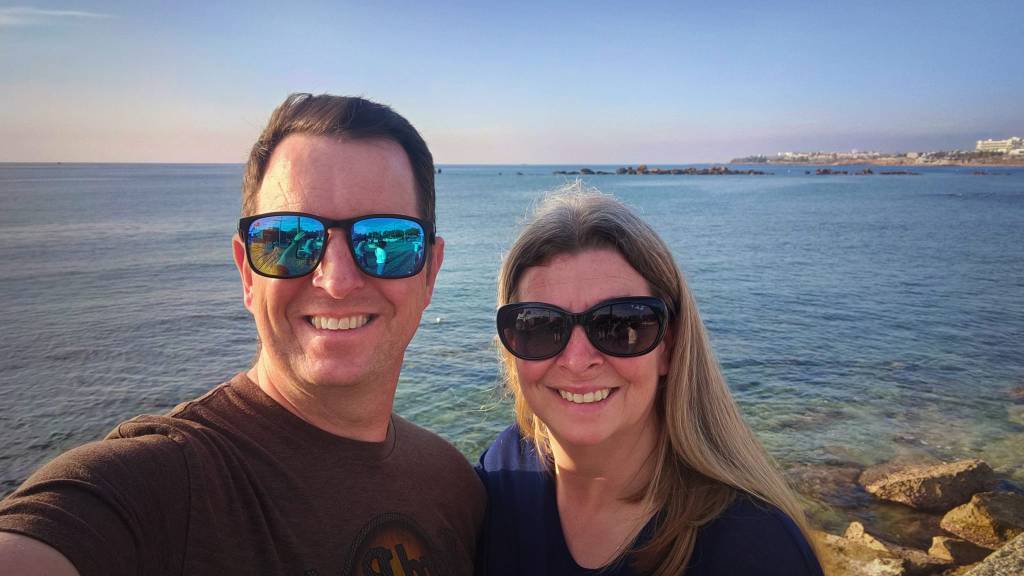
Although Cyprus is an island of divisions, there is so much to offer and so much to explore with a mish mash of the ancient and the modern, and we were delighted to have been invited over.
Mr Nomad and I thoroughly enjoyed our Christmas away, spending precious time with dear friends and in between the moments of merriment, we had been treated to amazing cultural and historical sights, and the diversity offered by a disunited island. Each day had brought a new adventure in the best of weather, and in the best of company and we were grateful to those around us who allowed us to experience such magic.
#bringon2024
#wemissedthedoggies
#friendshipforever
#allyouneedislove
 Nomadic Family Unit
Leave a comment