
The largest island of the Ionian islands found in the Ionian Sea was the magical destination of Kefalonia. Mr Nomad and I decided to take ourselves away on a more local trip to one of the most beautiful islands of Greece. In recent years, we had ventured across continents to Asia and Africa but given the wallet busting renovations to our new home, we opted to stay in Europe so as not to waste precious time on extraordinary travel, and also on a shoestring budget.

Located off western Greece, Kefalonia is the sixth largest of the Greek islands, after Crete, Euboea, Lesbos, Rhodes and Chios. The other Ionian islands, called the Seven Islands are its neighbours Ithaca, Zakynthos, Lefkada, Paxos with Corfu to the north and Kithira to the South. Its population is small, estimated to be between 35,000 and 42,000 occupying an area of approximately 781 square kilometres. Mr Nomad and I sought sunshine and sea but we also hired a car to allow for journeys around the island to see what Kefalonia had to offer. We were accommodated in Svoronata in the south part of the island which was quiet and sleepy and exactly what we required.
There were a few local tavernas within walking distance from our villa, and a supermarket where we were able to purchase supplies for the coming days. We couldn’t wait to taste the Greek cuisine and sample the local wine, known as Robola. Ammes beach was right on our doorstep and we were excited to see what other delights this island had in store for us.
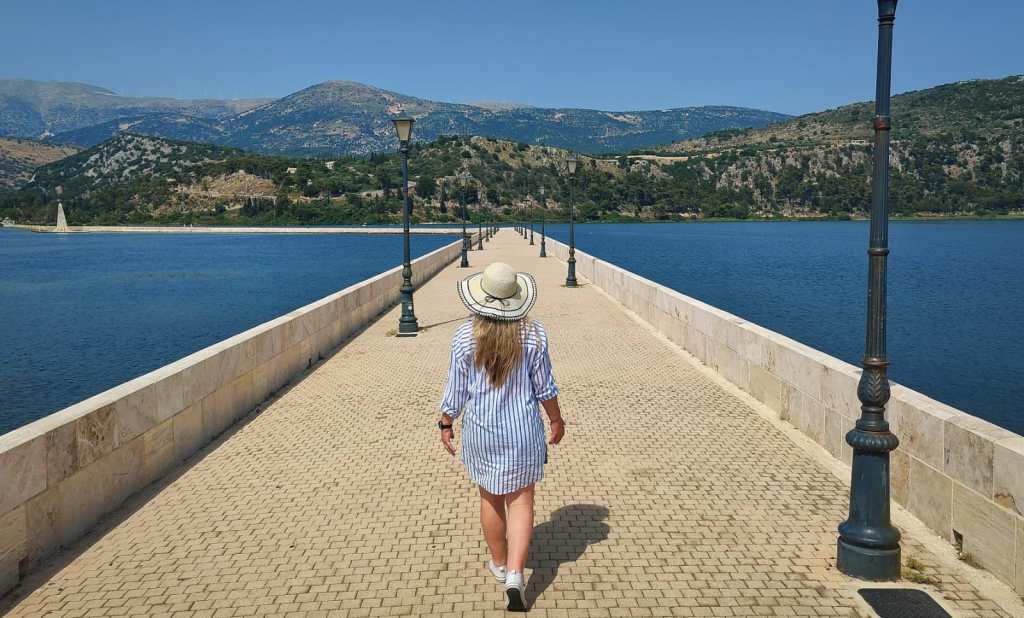
Prior to collecting our hire car, we took the bus into the island’s capital, Argostoli. The capital is inhabited by around 9000 people and is extremely picturesque with a magnificent marina. We sat on the edge of the bay and ordered brunch overlooking a fabulous pedestrian bridge, known as De Bosset Bridge which spans both sides of the gulf and is approximately 200 years old. It was gloriously sunny and hot, with temperatures in the late 30’s C and to our utter delight, as we gazed around stunned by the beauty of the town, loggerhead turtles swam around freely and undisturbed in the bay. Mr Nomad and I couldn’t believe our luck. We have travelled the world keeping a look out for such mystical creatures and here they were, swimming right up to the marina walls nonchalantly. And on our first day of this jaunt!

Kefalonia is well known for its logger head turtles, called Caretta Caretta by the locals, but we had not appreciated just how prevalent they were. We had not dared to hope to see one and here they were, just paddling around at ease in their natural habitat. We couldn’t wait to explore the island and this first day had entranced us already.
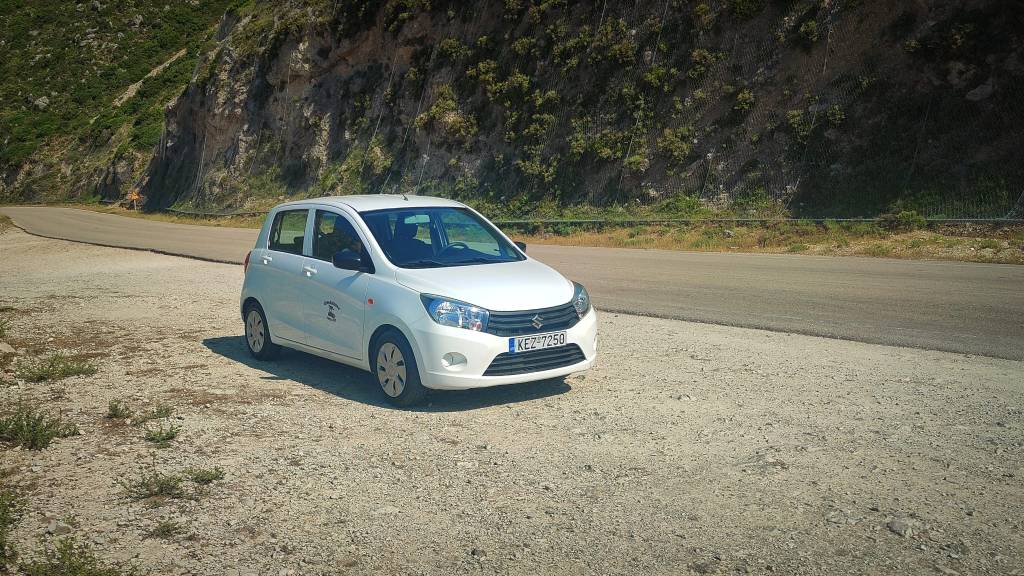
We collected the hire car which resembled a roller skate and we fondly named it Kez. It suited our purposes and although the island is famed for its beautiful beaches, it is also rugged and mountainous and we were warned not to go off road. The highest mountain is Mount Ainos with an elevation of 1628 metres and to the west north west is the Paliki mountains in Lixouri. Whilst the topography was amazing, we had no desire to become stranded so we avoided the mountains where possible and set out to visit many of the wonderful sights that Kefalonia is known for.
Some of those sights were two caves – Melissani cave and Drogarata. Melissani cave is also known as the Cave of the Nymphs and is located on the outskirts of Karavomylos village some two kilometres from the town of Sami. It is an underground lake, discovered in 1951 and the entrance is vertical having been created when part of the roof fell in. Mr Nomad and I were led down a man made underground corridor where we boarded a small row boat and we were able to drift along in the beautiful water which changed shade as the sun filtered down through the exposed roof. The lake itself is around 20 metres below the ground and its waters have depths of between 10 and 30 metres. Inside there is a small islet and the cave itself has 2 chambers which form a letter “B” with one bathed in light and one bathed in darkness and covered in countless stalactites. The fleeting boat ride took us to a mythical and magical world where in around 3rd and 4th BC, the god Pan was worshiped along side the famous Nymphs. During excavations in 1962, there were many findings in the cave such as oil lamps, plates and figures offering a glimpse of the mythology that ancient Greece has come to represent.

After the mysticism of Mellisani, we ventured to Drogarati cave which was equally as spectacular but for different reasons. It was imposing as opposed to dreamy, and was filled with an abundance of both stalactites and stalagmites. It had a more mightier feel than Mellisani and we were informed that concerts were often held in the cave because of the fabulous acoustics.
We travelled on through the town of Sami, stopping briefly to picnic at the waters edge of the bay but then we travelled on to Antisamos beach to catch some rays. Kefalonia has wonderful beaches with the crystal clear blue waves of the Aegean sea and Antisamos beach did not disappoint. This was the area where the film known as Captain Corelli’s Mandolin was filmed, starring Nicholas Cage and Penelope Cruz amongst others. The book of the same name by Louis de Bernieres was based on events from World War II on the island and the film was made some years after and filmed on location.

The beach was quite busy but well managed with plenty of sun beds so Mr Nomad and I were able to get some rest and relaxation. We braved the pebbles and even managed a swim in the warm waters and although the beach was superb, we craved something a little more low key.

The evening saw us venture to a nearby taverna where we were presented with the ‘catch of the day.’ I am not a lover of fish but Mr Nomad was tempted by the fresh Tuna steak which he assured me was the best he had ever eaten. This was also where we sampled the local wine, Robola. This delicious fruity fresh drink became our newest passion and certainly became the theme of the holiday thereafter.

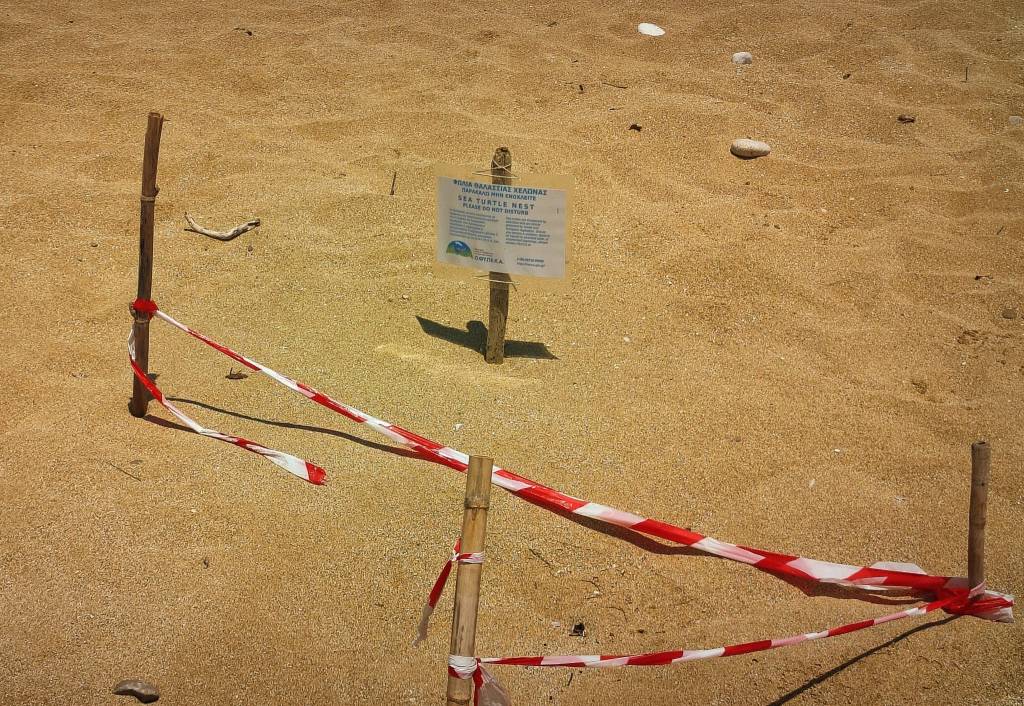
Our trip the following day took us south towards Skala. We had intended on heading on to Poros but we became distracted by a visit to a little known beach called Koroni beach. In our quest to get off the beaten track and to avoid the crowds, we took a fairly treacherous road down a cliff side littered with startling hair pin bends, zig zagging our way down to find ourselves on a secluded beach. There was a handful of local people but it was fairly deserted. It was also a nesting site of the turtles and some areas were fenced off to avoid interruption by humans. We were impressed at such conservation efforts.
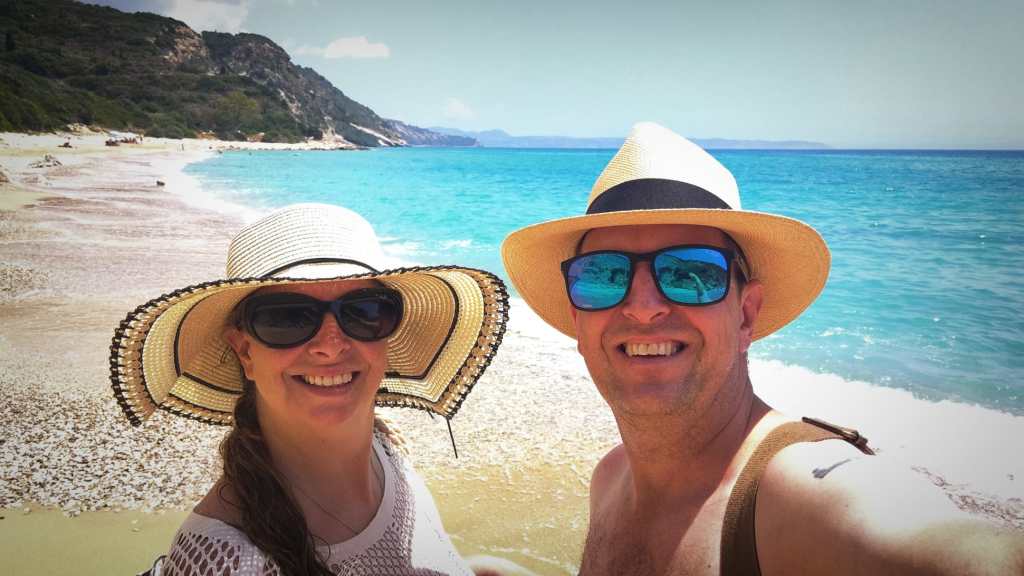
We made ourselves comfortable but with the relentless sun beating down us and a distinct lack of shade, we embarked upon a snorkeling expedition. We both love getting in the water and the azure water here was no exception. That said, although the sea was crystal clear and we questioned the need for masks to view the sea bed, there was little aquatic life to be seen. After the refreshing swim, Mr Nomad skillfully persuaded Kez back up the steep cliffs and we drove on to Skala.
Skala was somewhat larger than Svoronata and much busier. It seemed to be a tourist hub and although the beach looked glorious, we grabbed our lunch in a park overlooking the beach, taking in the sights. We then went to visit the Roman Villa but unfortunately, it was closed. However, we could still see into the ruins through the fences, and we could make out the most impressive mosaics in the floors of the villa.
Kefalonia is steeped in history having been continuously inhabited since the Stone Age. In ancient times, 4 cities flourished – Karnia, Pronnoi, Sami and Palli. The island was later conquered by Romans and during the middle ages, was part of the Byzantine Empire. During the 14th century, it was conquered by Normans, Venetians and even for a few years, the Ottomans. It returned to the sovereignty of Venice in 1500 AD until 1797, it was occupied by the French. It then became occupied by the British who invested in the island’s infrastructure, roads, bridges and ports. They established the Ionian State retaining a role as supervisor but in 1864, the Ionian islands were reunited with Greece. There is considerable archaeological interest in the island, with finds being dated as far back as 40,000BP. There is particular emphasis on the Mycenaean era from 1500BC to 1100BC with an important discovery as late as 1991 with the Mycenaean Tholos Tomb at the outskirts of Tzanata near Poros having been found. In late 2006, a Roman grave complex was found in Fiskardo and the remains date from 2nd century BC and 4th century BC. Driving around the rural parts of this island, it felt as if it was the land that time forgot and in many of the areas that we drove through, clock towers seemed to be at a stand still, adding to the feeling of being stuck in a remote era from long ago.
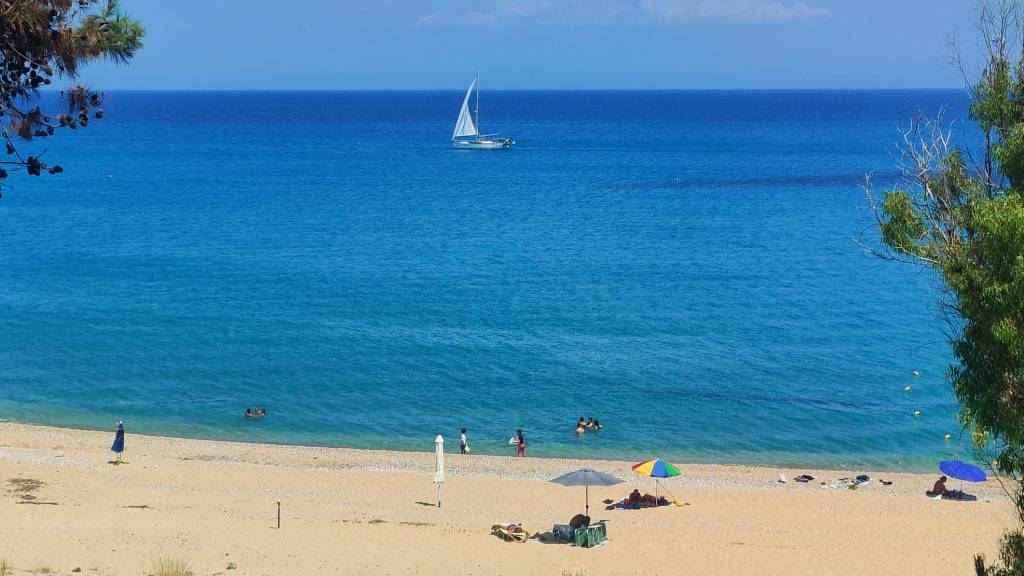
Mr Nomad and I loved this liberation from our busy lives back home and we celebrated the peace and tranquility with litres of Robola and the traditional Greek dishes of beef stifado, moussaka and lamb kleftiko to name but a few.
Our travels turned to the north of the island and we headed towards Fiskardo. The journey took us along precarious cliff side roads but the scenery was stunning and as we wound our way up through the mountainous topography, we were able to stop at a viewing point and look down upon the enchanting Myrtos Beach. This beach is approximately 8 kilometres in length of glistening sand with the most tranquil azure waters lapping against the shore. It lies between 2 mountains; Agia Dynati and Kalon Oros.
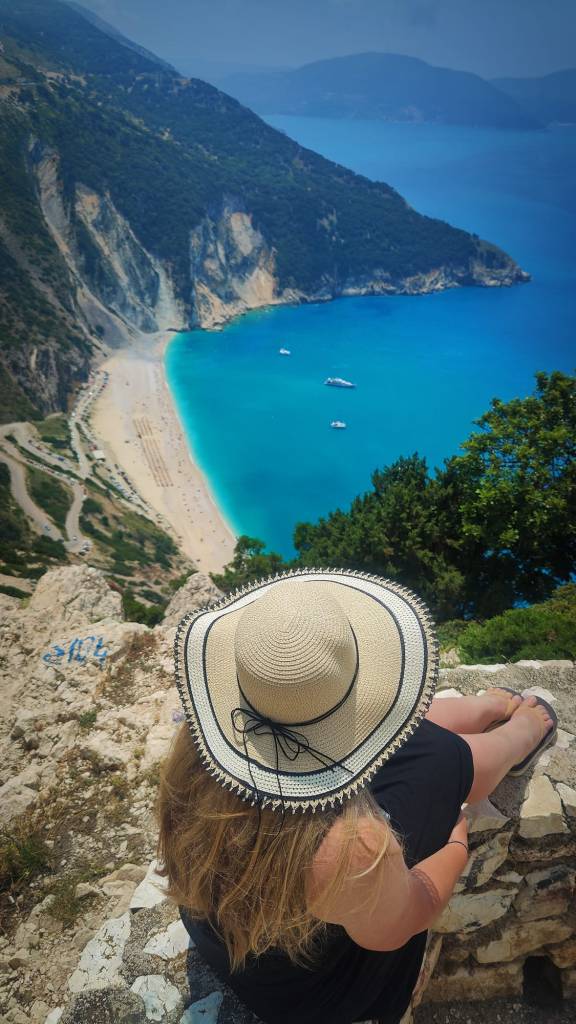
The area is of special geological interest because of the intense active tectonics, and it is incredibly unstable with rock falls and landslides a very real risk. Following the earthquake in 2014, this is exactly what happened when rocks fell and landslides arrived on Myrtos beach itself.
Whilst taking the opportunity to take the most amazing pictures of the mesmerising Myrtos beach, we were able to see the town of Assos. This traditional and enchanting village appeared to be on its own small islet and we had been informed that it had been devastated by the earthquake of 1953, whereas Fiskardo was the only village that had survived the very same earthquake. Although we had originally been heading to Fiskardo, we were bewitched by Assos so deviated there to explore.
Kefalonia lies to the southeast of a major active fault zone, where the Eurasian plate meets the Aegean plate. It is reputed as being one of the most seismic regions of Europe and much destruction has occurred over the years, with the most destructive earthquake having occurred in 1953. Almost all buildings on the island were levelled, and most of the population fled in the wake of its devastation. Fiskardo is the only village that strangely remained intact. This earthquake also raised the island by some 60 centimetres which is evidenced by water marks on the rocks around the coastline. There have since been earthquakes in 2003, 2005 and 2014 but it seems that the islanders have now learned to coexist with this seismic area and one of the bridges that we drove along was said to be an achievement in engineering as it was built to withstand future earthquakes.
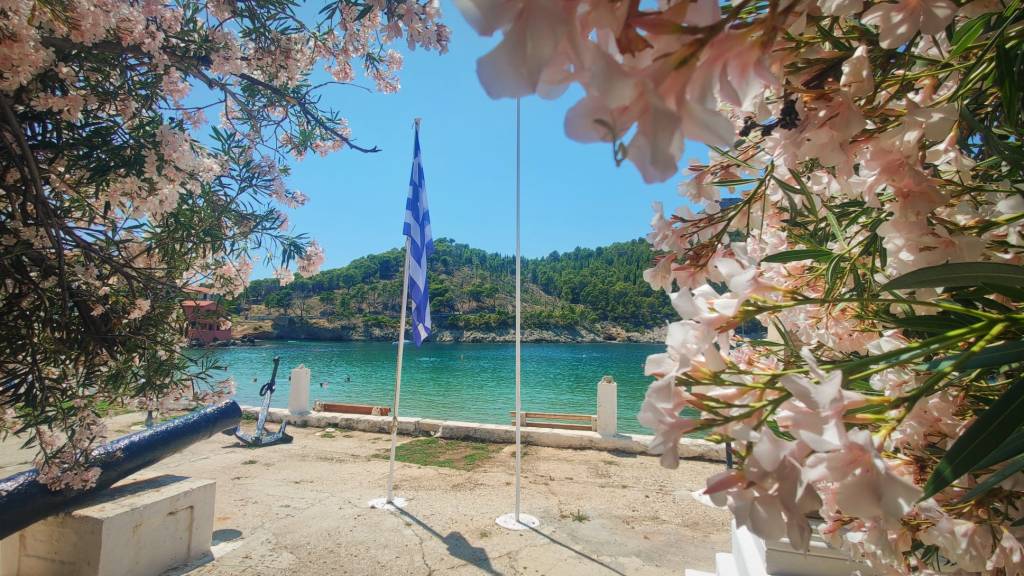

If we had the feeling of time standing still across the island, it most certainly had stopped in Assos. This quaint and traditional venetian style village was still littered with ruined buildings in a state of dilapidation having been destroyed and abandoned following the earthquake in 1953 and now reclaimed by nature. It was truly stunning and although we didn’t see turtles here, it became our favourite place. It was enchanting, and after a coffee on the quiet lapping bay front, we ventured down to the water for a gentle swim in the shadow of Assos castle. It was magical and for that moment, Mr Nomad and I were transported to a different world.
Our final day in Kefalonia led us back to where we had started – Argostoli. We visited the pretty lighthouse known as the Lighthouse of Agioi Theodoroi, and the sink holes known as Koutavos Lagoon on the outskirts of the town, and we paid our respects at the Acqui Monument.

This monument commemorates the massacre of the Aqui Division and it is this event that the book and film, Captain Corelli’s Mandolin is based upon. During World War II, and late into 1943, the island was largely occupied by Italian forces, although there were some 2000 German troops present also. Following armistice, Italians hoped to return home but the Germans were not keen on Italian troops using their munitions against them. There ensued the arrival of more German troops and an invasion which ultimately led to the execution of around 5000 Italians. This is remembered by Kefalonia and Mr Nomad and I could not miss such a memorial.
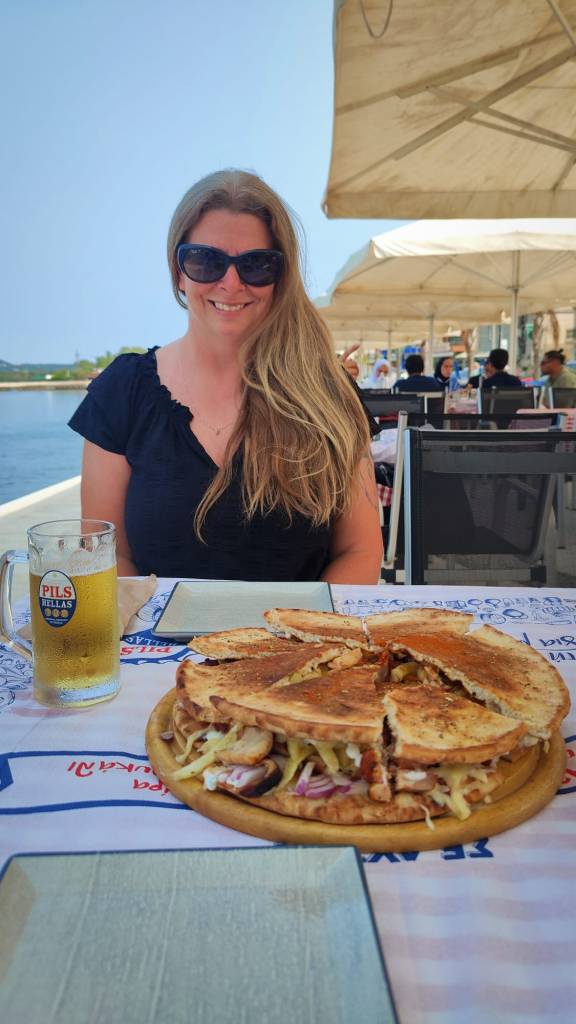
Our final supper in Argostoli allowed us to enjoy another Greek cuisine of Gyros. We felt that we had saved the best till last and we were not disappointed by the giant meal. We avoided the Robola on this occasion as we had to return our trusty steed Kez, to the hire company. We had saturated ourselves with it in previous days so we were on the downward slope to detoxification.
We left the restaurant by romantically strolling along the walls of the bay and we were serenaded by numerous loggerhead turtles, playing and frolicking in the water. We stared in wonderment, mesmerised by these marvellous creatures and reveled in their proximity to us.
It was a fitting goodbye to an island whose beauty had taken our breath away.
#notallthosewhowanderarelost
 Nomadic Family Unit
Leave a comment